REVIEW · PRAIA
Cape Verde: Best Hikking Trails of Santiago Island – 6 Days
Book on Viator →Operated by Bu Country Tours · Bookable on Viator
Santiago Island mixes hard work and big payoffs. This 6-day hiking-focused tour pairs day hikes with small-town visits, UNESCO sights in Cidade Velha, and stops that explain Cape Verde’s everyday life, including a rum-making distillery during production season (Jan 1 to May 31). You also get the comfort of door-to-door transfers, so you’re not spending your vacation figuring out rides.
I really like two things about this plan: first, the hiking is built for actual walkers, from easier valley paths to the steeper Pico d’Antónia day; second, the tour does the admin for you—hotel transfers, entrance fees, and key meals are handled up front. In the customer feedback I reviewed, guides and drivers like Admilson, Rita, and Walter were praised for personal attention and keeping the pace smooth.
One consideration: a couple of days ask for tougher legs and longer time on your feet. The program also runs with fixed daily time windows (often starting around 9am), so it’s less ideal if you want total freedom to roam on your own.
In This Review
- Key Highlights You’ll Actually Feel
- What You Get for $1,102.91: Transfers, Tickets, and Meals
- Day 1 in Praia: Airport Meet-Up and a Low-Stress Start
- Day 2: Calabaceira Valley Hike, Rum Making, Then UNESCO Cidade Velha
- Day 3: Monte Txota Natural Park and the Highest Point, Pico d’Antónia
- Day 4: Assomada Market, Serra Malagueta Wildlife, and Tarrafal Beach Reset
- Day 5: Tarrafal Beach Time and the Optional Chão Bom Stop
- Day 6: East Coast Customs at Rabelados, Plantation Walks, and Plateau Food
- Pace, Packing, and Hiking Reality on Santiago
- Who This Tour Fits Best (and Who Should Look Elsewhere)
- Should You Book This 6-Day Santiago Hiking Tour?
- FAQ
- What time does the tour start?
- Is transportation included?
- Are entrance fees included?
- What meals are included in the price?
- Which days does Assomada Market operate?
- How difficult are the hikes?
Key Highlights You’ll Actually Feel
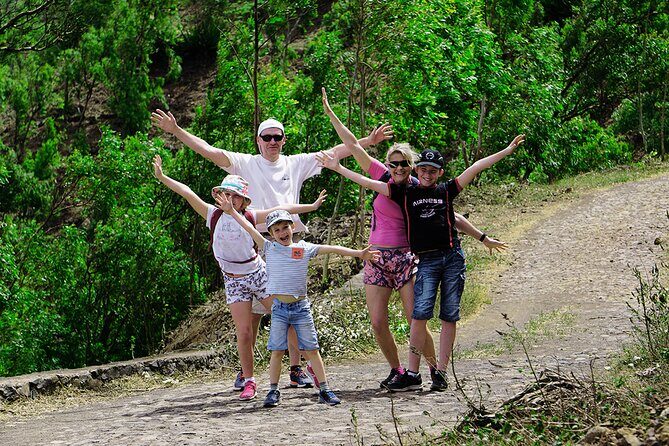
- Small-group feel (max 6 travelers), which helps keep the hikes calmer and the sights more manageable
- UNESCO Cidade Velha + fort views, including spots tied to defense against pirates and the former slave market area
- Two “real” hikes: Monte Txota and the highest point on Santiago, Pico d’Antónia
- Nature Park stops with specific local wildlife and plant talk at Serra Malagueta
- Rum distillery visit timed to the season when production runs (Jan 1 to May 31)
- Tarrafal beach time built in, so you’re not hiking every single minute of the trip
What You Get for $1,102.91: Transfers, Tickets, and Meals
At $1,102.91 per person, this isn’t a bargain-style escape. But the value comes from what’s included and how much time it saves you. You get 5 nights of accommodation, arrival and departure airport transfers, and hotel pickup and drop-off for the touring days, with luggage transfers noted in the package.
Then there’s the stuff that quietly blows up budgets elsewhere: entrance fees and tour fees and taxes are included for the stops listed in the program. Meals are also partially covered: breakfast (5 times) and lunch (4 times) are included, with lunch described as fish/meat option plus dessert and water. Dinner isn’t included every night—on the last day you have food stops at named places, and one dinner-with-music stop is specifically not included—so you still get a chance to choose or pay only when it’s part of the plan.
The only cost you should plan for outside the package is the tourist tax (paid locally: 2 euros per person per night) and whatever your international flight costs. If you like structure and hate surprises, this pricing model makes sense.
You can also read our reviews of more tours and experiences in Praia.
Day 1 in Praia: Airport Meet-Up and a Low-Stress Start
Your trip starts at Nelson Mandela Praia International Airport. You’ll be met by a travel representative holding a sign with your name, then transferred privately to your accommodation in Praia. This kind of door-to-door start matters on Cape Verde, because it helps you get your bearings fast without hunting for rides.
Day 1 is light on walking, but it sets the rhythm for the rest of the week. You’ll have time to settle in, pick up what you need (water, sun protection), and decide what kind of pace you want for the hiking days ahead. It’s also a good day to get your footwear sorted—Cape Verde sun plus dry paths can be tough on day one if you’re unprepared.
If you’re traveling with family or want a smoother onboarding, this first day is a real strength. It’s the “get you in the game” day, not the “punish your legs” day.
Day 2: Calabaceira Valley Hike, Rum Making, Then UNESCO Cidade Velha

This is the day that makes Santiago feel like more than scenery. You start near a small village in Calabaceira, then head into a valley hike designed to be accessible: about 3 hours, with an easy difficulty rating and roughly ~300 m ascent/descent. The walk begins from the top of the valley, where you shift into an oasis of vegetation in the interior.
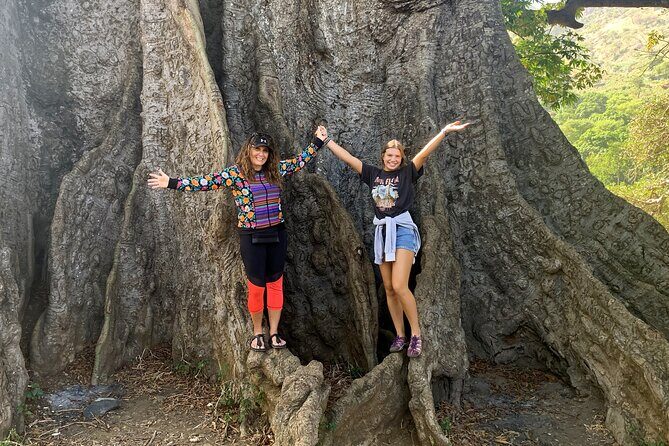
What I’d watch for on this hike is how the trail connects nature to human story. The valley is tied to baobab trees mentioned by Charles Darwin, and it’s also described as a place that served as an escape route for slaves. Add in local flora and fauna and it’s not just a pretty walk—you get context as you go.
After the hike, the program includes a local rum-making distillery visit. The key detail here is timing: rum production runs from Jan 1 to May 31, so if your dates fall in that window, you’ll have a better chance of seeing production in action.
Then you switch worlds to Cidade Velha, a UNESCO World Heritage Site, and you get a layered old-town visit:
- São Francisco Convent
- Banana Street
- Nossa Senhora do Rosário church
You’ll also have lunch at a typical restaurant right on the seafront, which is a nice reset after the hiking.
The afternoon deepens the theme with stops at Pelourinho (former slave market), Sé Catedral ruins, and the Royal Fortress of São Filipe, followed by viewpoints over the old town. You’ll learn how the town was defended against pirates—useful context that turns the stones into a story.
Practical note: this is a long day, and it’s mentally dense. If you prefer lighter, you may want to keep your museum-mouth shut and just enjoy the walking and views at a steadier pace.
Day 3: Monte Txota Natural Park and the Highest Point, Pico d’Antónia
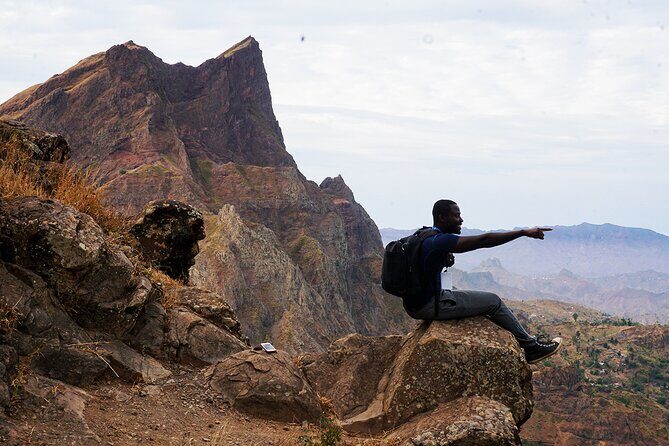
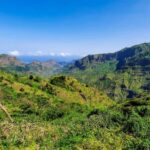
Day 3 is your “earn it” day. You start with a scenic drive to Rui Vaz, then climb into the Natural Park of Monte Txota at around 800 meters. The tour describes it as one of the cooler places on the island with a microclimate and lots of biodiversity. Translation: it’s a good day to wear breathable layers because mountain shade can be real, even when the coast is blazing.
The main event is Pico d’Antónia, the highest point on Santiago at 1394 meters. Expect about a 4–5 hour trek, with a stop for a small picnic and broad panoramic views if weather cooperates. The hike includes a route length listed as about 3000 meters, with roughly 672 m ascent and ~400 m descent.
It’s rated difficult, and the path quality is described as narrow in places but safe. That means you should come ready for careful steps, not just stamina. If you’re not confident on uneven or narrow paths, this is the day to take slowly, keep your footing, and listen to your guide’s pace-setting.
You also get bonus payoff if skies clear: the tour mentions views that can include Maio Island and Fogo Island volcano. Even when you don’t catch the distant islands, you still get an altitude perspective on the São Jorge Valley.
At the end, you return to Monte Txota and then ride back to your hotel in Rui Vaz, Quinta da Montanha. That return matters. After a difficult hike, having transportation locked in helps you avoid the common trap of sitting too long in the heat afterward.
Day 4: Assomada Market, Serra Malagueta Wildlife, and Tarrafal Beach Reset
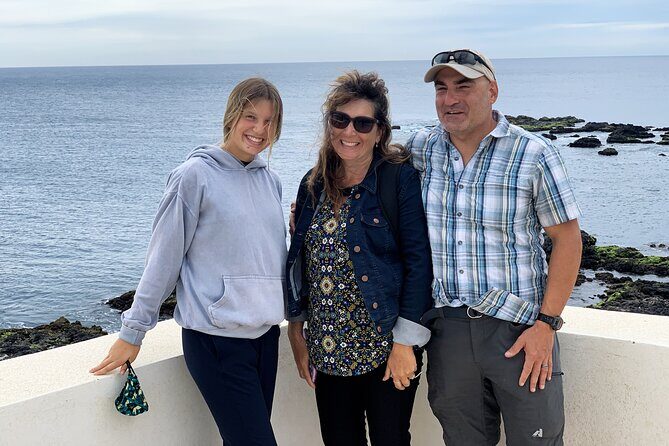
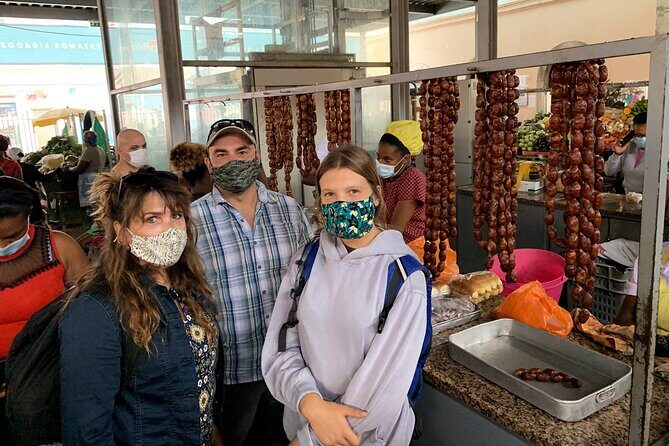
This day starts with culture you can actually see and smell. In the morning, you head to Assomada Market, a hub where you’ll wander stalls and watch locals haggle for produce. Timing matters: the tour notes the market visit is only on Wednesdays and Saturdays. If your days don’t line up, don’t assume you’ll see it.
From there, you drive to Serra Malagueta Natural Park for a 3-hour trek through a protected area of 774 hectares. The tour includes specific biodiversity facts—124 species of plant and 19 species of bird—and it also mentions a real chance of wildlife like monkeys, reptiles, and colorful butterflies.
This is one of those days where the guide’s talk is part of the experience. Even if you’re not a hardcore bird person, hearing which species are local and which are rare changes how you look at what’s around you. You’ll also stop for rest along the way and then make your way to Tarrafal Beach.
In the afternoon, you get free time to chill on the shore for about 1.5 hours, then you’re dropped at Tarrafal. The pacing is smart. After two hiking days and a market morning, Tarrafal works like a pressure release.
If you hate long drives, note that this day has more transit than the valley hikes. But it’s also the only day that combines market energy, park walking, and ocean time in one package.


Day 5: Tarrafal Beach Time and the Optional Chão Bom Stop
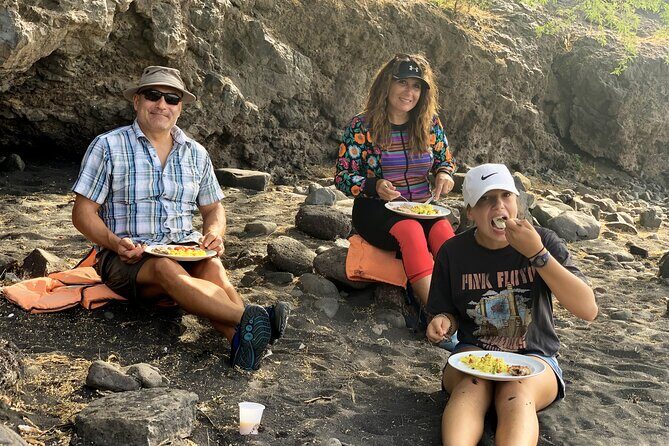
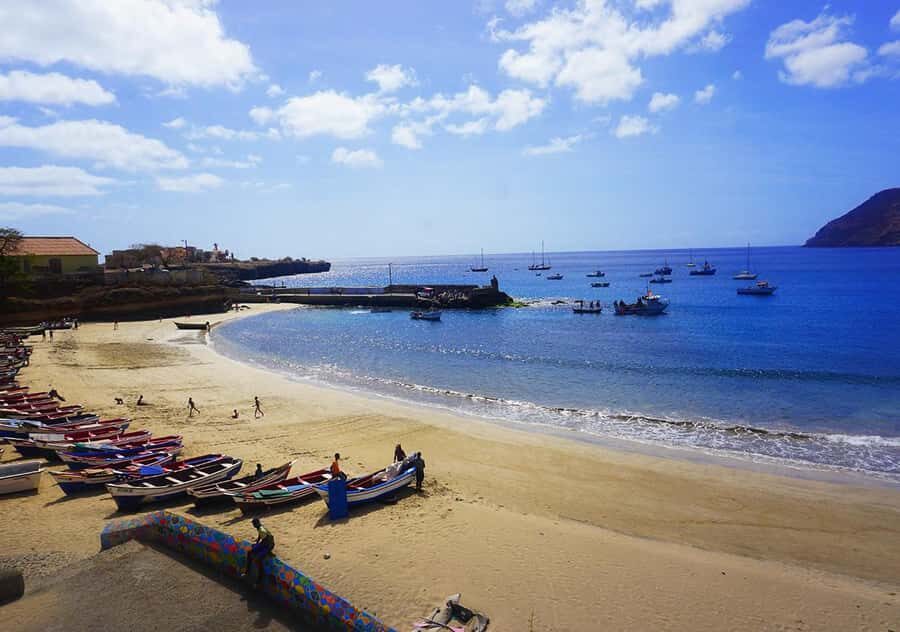
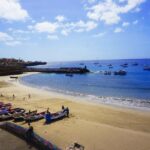
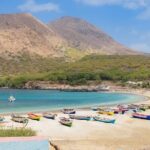
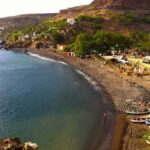
Day 5 is built for recovery. Breakfast is included, and then you have a lot of flexible time on Praia do Tarrafal, described as the island’s most picturesque beach, with white sand and clear waters. The plan sets aside about 7 hours, which is unusual in hiking itineraries.
That long beach block is good if you want to:
- soak your feet and ankles after prior trails
- do a slow swim break
- take your own photos at your own pace
The program also notes you can consider a visit to Chão Bom Concentration Camp, described as a resistance museum used to imprison political prisoners who fought against the dictatorship. The key point: the tour data doesn’t clearly label it as part of the included stop sequence with a fixed duration. So treat it as an optional add that depends on timing and interest.
If you’re the type who needs to stay active, this is also your day to plan a simple self-guided stroll near Tarrafal. If you’re the type who needs quiet, this is your day too—because the tour gives you time, not just a checkmark.
Day 6: East Coast Customs at Rabelados, Plantation Walks, and Plateau Food
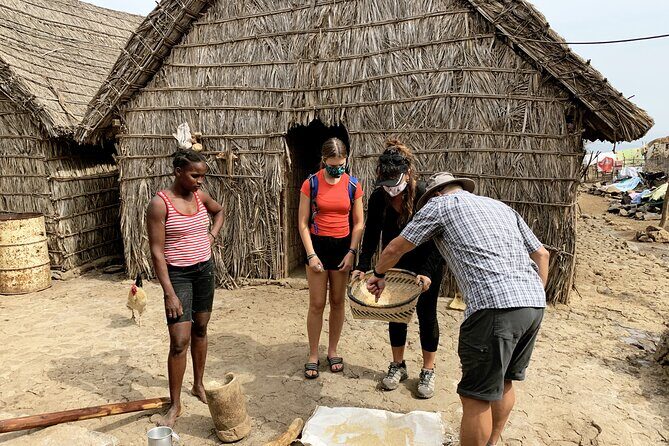
Your final day shifts toward everyday life on the island, plus food you’ll remember. You’re picked up and head along the east coast with a first stop in Espinho Branco.
There you visit the religious community of Rabelados, noted as the only community that still lives in thatched houses, preserving Cape Verde’s oldest customs and beliefs. The stop includes time for handicraft production and an opportunity to buy handmade paintings from local artisans. If you like taking home something that’s not mass-produced, this is where the tour earns its keep.
Next comes Santa Cruz, where you visit the largest banana and coconut plantation in the country. You’ll take a small walk inside agricultural fields while a local guide explains fruit varieties and dozens of plants along the route. This is a gentle “walk with explanations” stop—not a big hike day—but it adds texture to what you’ve already seen inland.
Then you head into the historical center of Plateau. The walking tour covers Jaime Mota Military Barracks, the Presidential Palace, and Alexandre Albuquerque Square, starting at Praça Alexandre Albuquerque. The program also includes a stop at the Municipal Market, but it’s explicitly closed on Sundays—so your experience here depends on the day you arrive.
For food, the tour includes special touches at Casa Katxupa (katxupa, listed as the national dish) and also references Quintal da Música, where you can have dinner while a local band plays traditional music. One dinner stop is marked as not included, so if live music matters to you, double-check what’s covered in your exact booking.
Finally, you’re dropped back in Praia and transferred to Nelson Mandela Praia International Airport.
Pace, Packing, and Hiking Reality on Santiago
This is a moderate-to-active week with a clear range of difficulty. Most days start around 9am, and the full schedule can run late afternoon depending on the hike length. You should plan for time off and on, not constant sightseeing.
Here’s what the hiking profile looks like in plain terms:
- Easy valley hike (Calabaceira): about 3 hours, ~4500 m extension, ~300 m ascent/descent
- Difficult summit trek (Pico d’Antónia): about 4–5 hours, ~3000 m extension, ~672 m ascent
- Nature park hike (Serra Malagueta): about 3 hours, easier profile, focus on flora/fauna
- Monte Txota (setup and return): the climb environment supports the day’s main effort
Path descriptions in the program mention narrow spots on some routes. The good news is they’re described as safe, but you still need to bring your attention game. I’d treat this like real hiking, not like a sightseeing stroll.
Packing list is straightforward and useful: sandals/flip flops, a towel, hat, swimwear, and sunscreen. Bring those even if you think you won’t need them—Tarrafal beach and hot sun days will prove you wrong. And for summit-day hiking, wear shoes you trust on uneven ground.
Who This Tour Fits Best (and Who Should Look Elsewhere)
This works best if you want:
- Guided hiking with real context (not just walking for walking’s sake)
- a small group feel and fewer crowd pressures
- a balanced mix of nature, culture, and food
It may not fit if you:
- want completely unstructured days
- dislike steep climbs and long time outdoors
- need a tour with minimal walking days
The sweet spot is travelers with moderate physical fitness who enjoy learning while moving. If your favorite travel days are the ones where you combine a viewpoint with a story, this is your kind of route.
Should You Book This 6-Day Santiago Hiking Tour?
I’d say yes if you’re choosing between random activities and a plan that’s built to reduce friction. The best reason to book is that you get hiking plus UNESCO and local life without the logistics stress: transfers, entrance fees, and major meal stops are included.
I’d also recommend it if you care about Santiago’s layers—valleys and baobabs, rum-making, pirate-defense viewpoints, wildlife in Serra Malagueta, and the beach reset at Tarrafal. The itinerary flows in a way that feels like a journey rather than a checklist.
Book with extra confidence if your dates fall Jan–May, since the rum production season window is specifically stated. And if you’re worried about difficulty, remember that the hardest day is clearly Pico d’Antónia, so you can judge your comfort level accordingly.
FAQ
What time does the tour start?
Start time is listed as 8:00 am.
Is transportation included?
Yes. You get airport transfers and hotel pick-up and drop-off for the tour days, with luggage transfers included.
Are entrance fees included?
Yes. The program states all entrance fees are included for the listed stops.
What meals are included in the price?
The package includes breakfast (5) and lunch (4). Dinner is not fully included every night; there are specific food stops on the final day, and one dinner stop is marked as not included.
Which days does Assomada Market operate?
The tour notes that the visit to Assomada Market is only on Wednesdays and Saturdays.
How difficult are the hikes?
Most hikes are described as easy to difficult depending on the day. The summit trek to Pico d’Antónia is rated difficult (about 4–5 hours), while the Calabaceira valley hike is rated easy (about 3 hours).