REVIEW · PRAIA
Tour Old City/Discover Old Town
Book on Viator →Operated by Águia Tours CV · Bookable on Viator
Old ruins, tight schedules, big stories. This tour hits Cidade Velha’s Portuguese-era landmarks and gives you a quick, guided way to connect the dots between forts, churches, and the darker parts of colonial rule. I also like the private transportation setup, because it keeps the day efficient without the hassle of arranging your own rides. One thing to consider: meeting up can feel confusing if pickup details are vague, and the vehicle may be tight depending on group size.
You’re in Cape Verde’s historical heartbeat for a short window—about 2 to 3 hours—with a driver-guide who explains what you’re looking at and how the pieces fit together. The route focuses on a handful of high-impact stops, including sites tied to Portuguese conquest, the slave trade era, and the later Franciscan mission period. If you want a long, slow ramble, this one is more of a focused walk-and-learn sprint than a half-day beach-to-views adventure.
In This Review
- Key highlights you will actually care about
- Cidade Velha in two to three hours: why this tour makes sense
- Price and logistics: value at $29.60, with a few practical caveats
- How the guide story turns monuments into something you can read
- Fortaleza Real de San Felipe: fortifications after Drake’s 1585 strike
- Se Catedral ruins: Portuguese ambition, preserved fragments
- Igreja Nossa Senhora do Rosário: one of Santiago’s oldest temples
- Pelourinho: the monument of municipal power and public punishment
- Convento de São Francisco: Franciscan mission, craft training, then destruction
- What to wear and bring for a comfortable old-town walk in Cape Verde
- Where this tour fits best (and where it doesn’t)
- Should you book Old City/Discover Old Town?
- FAQ
- FAQ
- How long is the Old City/Discover Old Town tour?
- Is pickup offered for this tour from Praia?
- What is included in the tour price?
- Are entrance fees included?
- Which stops have free admission?
- Is this tour private?
- What if the weather is bad?
- Are service animals allowed?
Key highlights you will actually care about
- UNESCO World Heritage center at Cidade Velha: you get context fast, not just photo stops.
- Fortaleza Real de San Felipe’s Drake-era backstory: Portuguese defenses after the 1585 attack.
- Pelourinho as a power-and-punishment monument: municipal authority shown in stone.
- A cathedral preserved in ruins: what the Portuguese built, and what time took.
- Franciscan convent history with names you can picture: Joana Coelho and the training mission.
Cidade Velha in two to three hours: why this tour makes sense
If you’re basing yourself in Praia, it’s easy to feel like Santiago’s best old-world sights are out of reach. This tour fixes that by focusing on Cidade Velha, the older core of Santiago’s Portuguese settlement, and packaging the story into a manageable length of time.
What makes this experience worthwhile is that it doesn’t treat history like a museum label. It connects the dots: Portuguese arrival and control, the fortifications that followed raids, the religious institutions that took root early, and the public symbolism of power—especially where punishment was made visible.
You get a guided walk through ruins and surviving monuments that sit in a landscape shaped by ocean proximity and centuries of neglect. The emotional weight can be real, especially around the sites connected to slavery and public punishment, so it helps to have someone translate the stone into meaning.
You can also read our reviews of more city tours in Praia

Price and logistics: value at $29.60, with a few practical caveats
The price is $29.60 per person, which is reasonable for a private, short-format history tour. It’s also priced in a way that makes sense if you want guidance without paying for a full-day excursion.
Here’s how the value usually plays out:
- Private transportation is included, so you’re not piecing together rides.
- The tour is 2–3 hours, which keeps costs down and limits fatigue.
- Mobile ticket support can make check-in smoother.
The possible drawback is timing and comfort. One experience included an abrupt start and a vehicle that felt small once everyone piled in. Another issue was a mismatch between how long the tour felt compared with what some people hoped for. So if you’re sensitive to schedule slippage, treat this as a “short, structured old-town visit,” not a flexible full half-day.
How the guide story turns monuments into something you can read
What you’re really buying here isn’t just access to ruins. It’s a practiced explanation of what you’re seeing—built from Portuguese colonization, maritime defense, and later religious mission work.
In practice, the best part of this tour is when the guide connects each stop to the larger picture. The places you visit are famous in Cape Verde’s early colonial timeline, but the meaning is easy to miss if you’re walking solo with only a phone and a map.
You’ll also get practical moments that save time: knowing where to look in a partially ruined site, and understanding why certain structures were built in the first place. When the guide is strong, you leave feeling like you actually learned how the city worked.
Fortaleza Real de San Felipe: fortifications after Drake’s 1585 strike
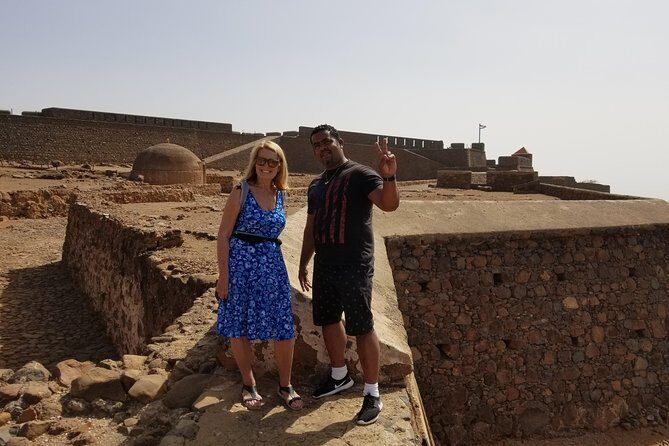
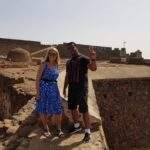
You start with Fortaleza Real de San Felipe, a key Portuguese defense point in what was then Ribeira Grande. The story is tied to the 1585 attack connected with Drake, and the fort’s development is placed in the late 1500s when Portuguese garrisons needed stronger control.
This is one of the stops where the guide’s explanations matter most. Forts can look like “old walls” if you don’t know the maritime logic. Here, the point is that Ribeira Grande functioned as an important early base in the Portuguese Atlantic world.
Practical note: the admission cost for this stop is not included, so your total outing may be a little higher once you reach the fortress ticket desk.
Also, take a moment to notice the way monuments sit against the sea. The ruins don’t feel like props. They feel like history left outside, exposed to weather and time, and that’s exactly what makes the place hit.
Se Catedral ruins: Portuguese ambition, preserved fragments
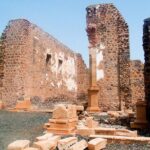
Next you reach Se Cathedral, which today is in ruins. This matters because the site is tied to the claim that the Portuguese erected one of their earliest major religious structures on the black continent, and it became a centerpiece of Ribeira Grande’s importance.
What’s valuable isn’t the intact building—it’s what remains and what’s being protected. Even in pieces, you can see how early Portuguese power expressed itself in religious architecture.
The guide’s job here is to keep you from getting lost in fragments. Ruins tempt you to hunt for what used to be there, but the smarter approach is to learn what the Portuguese intended the cathedral to represent, and how the city’s wider role shaped those choices.
Admission for this stop is listed as free, which makes it a great value add: you pay nothing here, and you get a lot of meaning per minute.






Igreja Nossa Senhora do Rosário: one of Santiago’s oldest temples
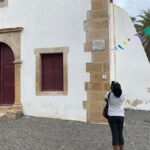
Then comes Igreja Nossa Senhora do Rosário, a church tied to the late 1400s (built around 1495). This stop is older than you might expect in a place that still feels “developed” in modern times. The date alone gives you a sense of how early these institutions formed.
One of the most interesting story threads connected to this church is Father António Vieira, who preached there in 1652 during a journey connected with Portugal and Brazil. If you like history that shows how ideas traveled—sermons, faith, education, and political influence—this is a strong pause.
Admission is free, so it’s another easy win. And it’s also a relief from heavier fort-and-punishment material. You still see the Portuguese footprint, but you get it through religious life and preaching.
Pelourinho: the monument of municipal power and public punishment
The Pelourinho stop is short in time but heavy in theme. It’s a Manueline-style white marble column in the main square area of Cidade Velha, built in the early 1500s (listed as 1512 or 1520) and restored in the late 1960s.
This column wasn’t just decoration. It was a symbol of municipal power, and it’s directly connected to slavery-era punishment. Rebel slaves were publicly punished here, which turns the monument into a physical reminder of how control worked.
If you visit this site with a neutral attitude, it can become just another picture spot. With guidance, you’re prompted to read it as public policy made visible—authority literally standing in the square.
Good news: admission is free for this stop, so you get the most morally intense site on the route without extra ticket cost.
Convento de São Francisco: Franciscan mission, craft training, then destruction
You end with Convento de São Francisco, a site connected to Franciscan presence in Cape Verde. It was constructed around 1640 on land donated by Joana Coelho, identified as the wealthy landowner and widow of Captain Fabião de Andrade.
The convent wasn’t only for worship. It functioned as a training center where priests taught crafts to the community. That detail matters because it shows you that religious institutions weren’t only about ceremonies—they were also about skills, labor, and community instruction.
Then history turns rough. The convent was practically destroyed after an attack by the privateer Jacques Cassard in 1712 and later damaged by a storm in 1754. You can feel that shift when you look at what remains: mission intent met maritime conflict, then nature finished the story.
Admission is free here too, which helps you keep your overall cost predictable.
What to wear and bring for a comfortable old-town walk in Cape Verde
Even when a tour is short, old-town walking adds up in heat and sun. Keep it simple and practical:
- Wear breathable shoes with grip. Streets can be uneven around historic areas.
- Bring water and a hat. The route is only a few hours, but you’ll want to stay comfortable.
- Use sunscreen. Even if the shade exists, ruins and courtyards don’t always cover you.
Also, plan your photos like a realist. In ruins, the most photogenic angle isn’t always the most informative one. Follow the guide’s direction first, then take pictures after you understand what you’re seeing.
Where this tour fits best (and where it doesn’t)
This tour is ideal if you want:
- A guided snapshot of early Portuguese Santiago
- A short, structured experience starting from Praia
- Focus on top sites within Cidade Velha’s UNESCO-listed historic core
It may not fit as well if:
- You expected a longer, more free-roam day. The time window here is built around a tight sequence.
- You need very explicit pickup cues and long buffer time. If you like certainty, confirm the pickup point details ahead of time.
If you get a good guide, you’ll enjoy the pace and the story flow. In at least one case, guide Nelson was noted for being warm and well-paced, with humor and helpful lunch suggestions at the end. That kind of finishing touch can turn a “sites-only” visit into a day you remember.
Should you book Old City/Discover Old Town?
I’d book it if you’re short on time and want a guided, high-meaning route through Cidade Velha. The price-to-content ratio is solid—especially since multiple stops are free to enter—and the private transport makes it feel easy from Praia.
But I’d also go in with the right expectations. Treat it as a structured 2–3 hour history tour. If you’re particular about schedule length, or you’re worried about where to meet the driver, confirm details clearly before you leave. That way you get the learning and avoid the annoying start.
FAQ
FAQ
How long is the Old City/Discover Old Town tour?
It lasts about 2 to 3 hours.
Is pickup offered for this tour from Praia?
Yes, pickup is offered, and it’s near public transportation.
What is included in the tour price?
The tour includes private transportation. The mobile ticket is supported as well.
Are entrance fees included?
No. All fees and taxes are not included, and at least the fortress stop has an admission ticket not included.
Which stops have free admission?
The cathedral ruins, Igreja Nossa Senhora do Rosário, the Pelourinho, and Convento de São Francisco are listed as free. Fortaleza Real de San Felipe is listed as not included for admission.
Is this tour private?
Yes. It’s a private tour/activity, meaning only your group participates.
What if the weather is bad?
This experience requires good weather. If it’s canceled due to poor weather, you’ll be offered a different date or a full refund.
Are service animals allowed?
Yes. Service animals are allowed.