REVIEW · ASSOMADA
Day with locals people
Book on GetYourGuide →Operated by CVT - CABO VERDE TRAVEL · Bookable on GetYourGuide
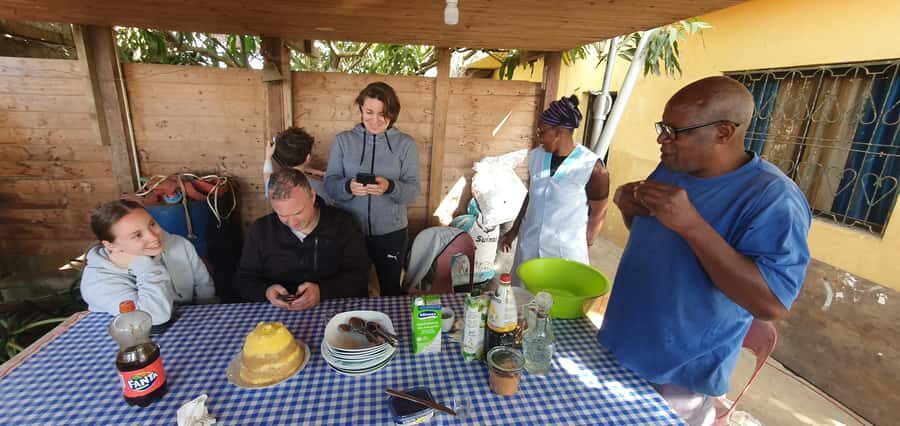
Cooking with a Cape Verde family beats tours. This full-day experience on Santiago Island is built around real home skills: you’ll shop at Assomada market, then learn couscous and traditional dishes in a farm-house setting. It’s the kind of day where you’re not just watching. You’re working at the table, tasting, and asking questions.
I especially love how the day blends hands-on cooking with local life, then finishes with a dance session that feels like part of the family routine, not a performance. The second big win is the warmth you get from Eloisa and her family, including Fernando, plus local guides like Malory and Ze who help everything land naturally. One consideration: this tour isn’t suitable if you have food allergies, since you’ll be preparing and tasting traditional dishes made with whatever ingredients are used that day.
In This Review
- Key Highlights You’ll Actually Care About
- From Hotel Pickup to Assomada Market: How the Day Gets Real Fast
- Meet Eloisa and Learn Couscous the Family Way
- The Three-Stone Stove: Cooking With Heat That Has Opinions
- Market-to-Meal: Buying Ingredients That Turn Into a Typical Cabo Verde Plate
- Sugar Cane Juice in All Stages: From Stalk to Glass
- Family Lunch and Food Tasting: Where the Day Turns Into Connection
- Dance Session: The Fun Ending That Doesn’t Feel Staged
- Price and Value for an 8-Hour Santiago Island Day
- Language Support and What That Means for Your Comfort
- Who Should Book This Tour, and Who Should Skip It
- Should You Book This Day with Locals on Santiago?
Key Highlights You’ll Actually Care About
- Assomada market time: interact with Cape Verdean women and pick up ingredients for a typical plate
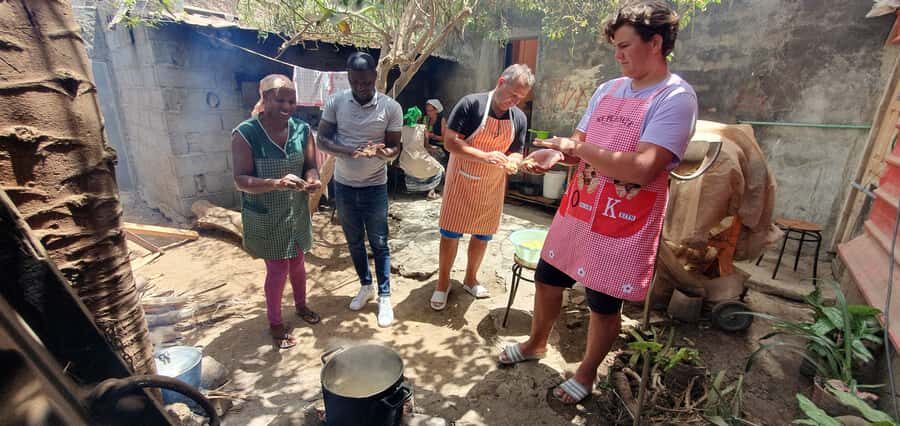
- Eloisa’s family welcome: cooking in a home setting with people who genuinely enjoy showing you how
- Couscous lessons: learn the famous method with help from Eloisa and her family
- Three-stone stove cooking: techniques you won’t see in a normal kitchen
- Sugar cane juice through the stages: crush it and taste it as it transforms
- Dance session with the family: a fun, easy ending that makes the day stick in your memory
From Hotel Pickup to Assomada Market: How the Day Gets Real Fast
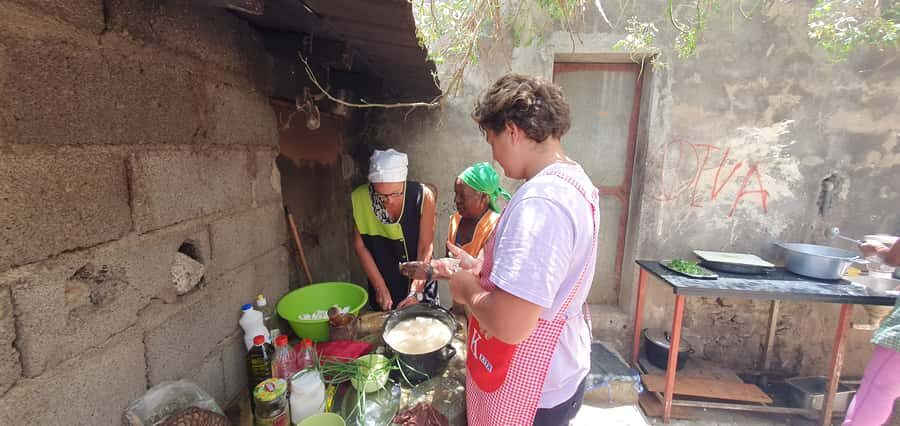
This tour runs as a straightforward, full-day loop: you’ll be picked up from your hotel, then head to Assomada market before moving on to the village of Mato Baixo and your farm-house meals, with drop-off back at your hotel at the end.
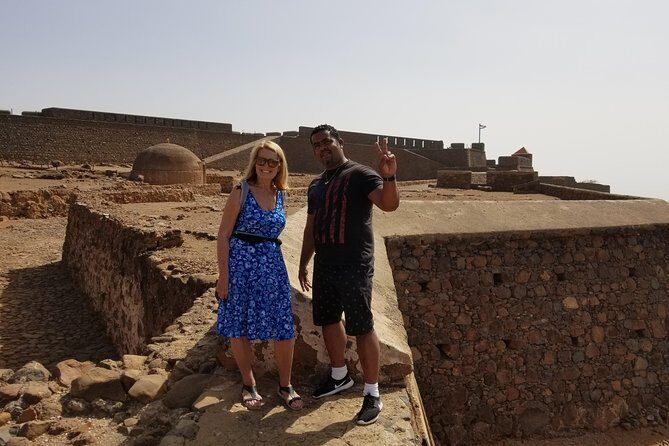
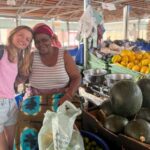
The market stop is not just a photo stop. It’s where the day earns its authenticity. You’ll visit a traditional market where you can chat with Cape Verdean women and buy the necessary products for a typical Cabo Verde plate. That matters because cooking later isn’t abstract. You’ll see ingredients in their everyday setting first, then use them with the people who cook like this every day.
Also, this is a private group, so the pace feels like it’s set for your questions and comfort. The live guide can help you connect the dots: what you’re buying, what you’ll cook, and why certain steps matter.
Practical note: markets can be sensory. If you’re sensitive to smells or crowd noise, you might appreciate taking breaks and moving at your pace while still engaging with the vendors.
You can also read our reviews of more tours and experiences in Assomada.


Meet Eloisa and Learn Couscous the Family Way
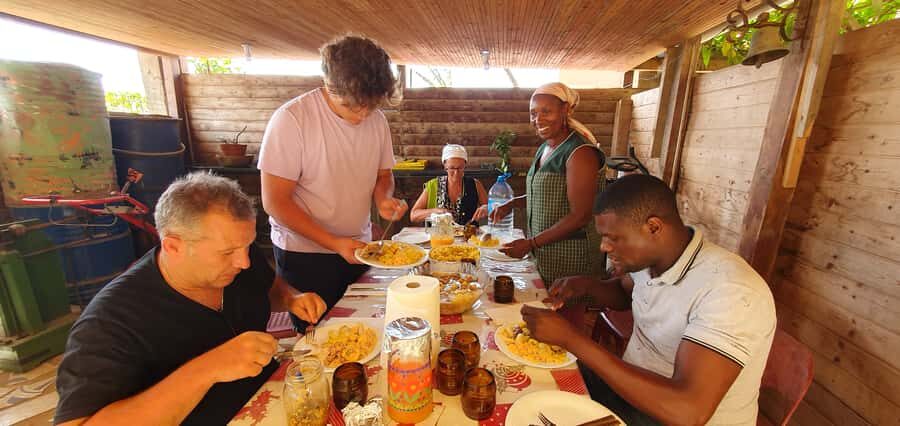
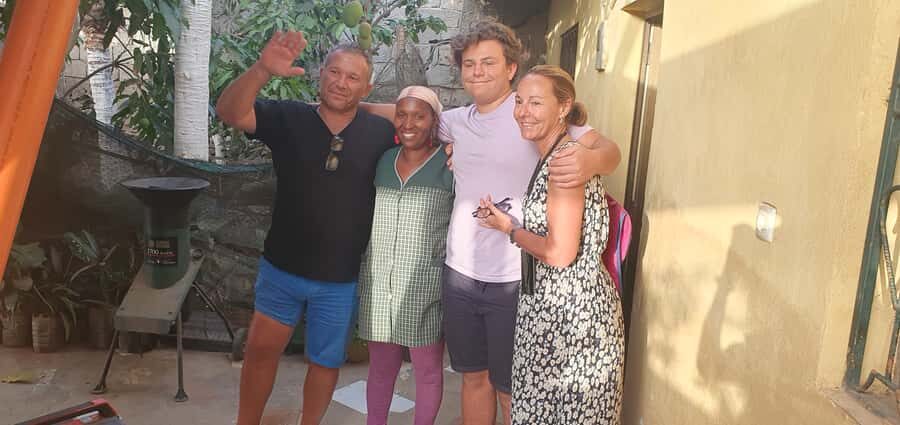
The heart of the experience is the welcome at Eloisa’s home with her family. You’ll be taught how to make the famous couscous, and you’ll also spend time with an older woman from the region who shares secrets of traditional dishes.
That combination is the real value: it’s not only “a cooking class.” It’s a hand-me-down skill exchange. Couscous here is treated like everyday craft, not a tourist novelty. When someone shows you how they do it at home, you learn more than steps. You learn how they decide what’s right along the way.
And you’ll see the difference between cooking from a recipe versus cooking with judgment. You’ll learn to pay attention to texture, timing, and how things behave on a stove that isn’t built for perfect uniformity.
In the reviews, people consistently mention Eloisa’s hospitality and the fun energy inside the house. You can also spot a key detail: guides like Malory and Ze help keep the tone relaxed and welcoming, including for people who want translation support while still participating.
If you enjoy interactive learning, this is built for you. If you prefer passive observation, you may still enjoy it, but you’ll get more from doing the steps with your hands.
The Three-Stone Stove: Cooking With Heat That Has Opinions
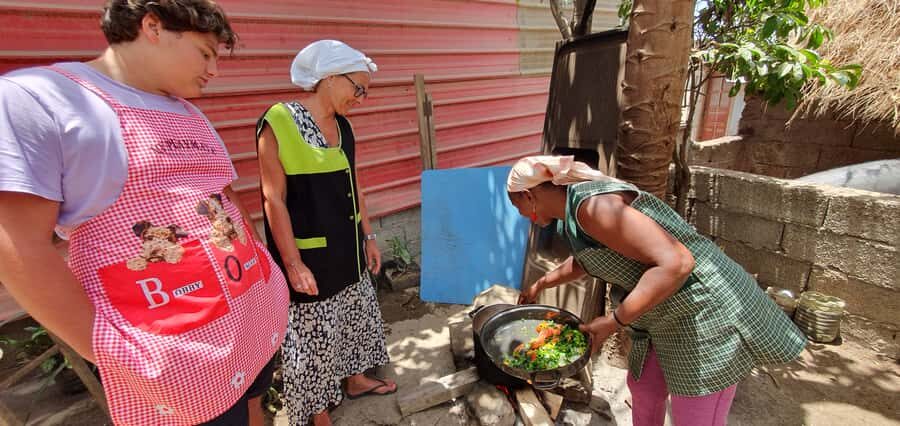
Later, you’ll learn cooking techniques on a traditional three-stone stove. This is one of those experiences that sounds simple until you try it. A stove like this doesn’t behave like a modern hob. Heat shifts, flame intensity changes, and your cooking rhythm has to match the environment.
That’s the point. You’ll understand why traditional cooking methods developed where they did. You’re not just making food. You’re learning how people adapt to what’s available and how to control the process.
This stove detail also connects to why the day feels practical. When you get shown the stove method, you learn skills you could carry home in a different form: how to watch rather than guess, how to adjust during cooking, and how timing changes when the heat is less “set.”
For the best experience, go in expecting that it’s okay if your first attempt isn’t perfect. Traditional cooking lessons work best when you treat them like conversation, not a test.
Market-to-Meal: Buying Ingredients That Turn Into a Typical Cabo Verde Plate
The day sets you up to understand ingredients as part of a system: buy what you need at Assomada market, then prepare the plate with your hosts.
You’ll be preparing traditional dishes for a family lunch (food tasting). “Tasting” matters here. You’re not just eating one plate and calling it done. The structure encourages small sample moments and conversation while food is fresh and flavors are at their best.
You’ll also learn how the cooking process connects to local life. Ingredients aren’t selected randomly. They match what people eat, what’s common, and what fits the household rhythm. When you shop first, it’s easier to appreciate that logic later.
One more reason this stop is valuable: interacting in the market helps you see Cape Verde beyond the brochure version. You’ll get a more direct sense of everyday commerce and the role of women vendors in the local food ecosystem.
If you’re traveling with a food-curious mindset, you’ll likely walk away with a clearer understanding of what makes a “typical plate” feel typical.
Sugar Cane Juice in All Stages: From Stalk to Glass
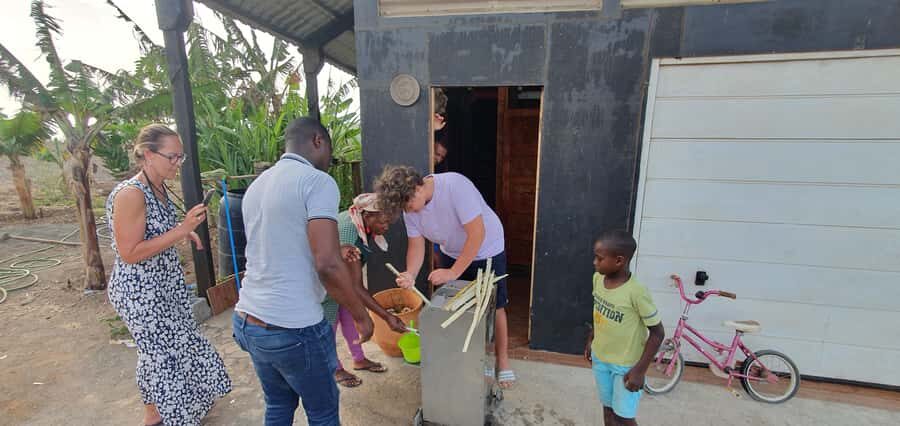
Then comes one of the most memorable parts of the day: you’ll crush sugar cane to get the juice, and you’ll taste it through the stages.
This isn’t just drinking juice. It’s a small production journey that shows how the ingredient transforms. You see (and help with) the physical work first, then taste the result as it changes. It’s a great way to slow the day down and pay attention to process.
In a lot of cultural tours, “hands-on” can mean stirring a sauce for two minutes. Here, you get a real step: the action of crushing cane, plus tasting along the way. It gives you something concrete to remember, even if you don’t speak the same language fluently.
It’s also a nice break from cooking intensity. After market activity and stove learning, juice becomes a cool, sensory reset before lunch and dancing.
If you tend to get sun quickly, remember sugar cane work can happen outdoors. Bring a light layer and take shade breaks when you can.




Family Lunch and Food Tasting: Where the Day Turns Into Connection
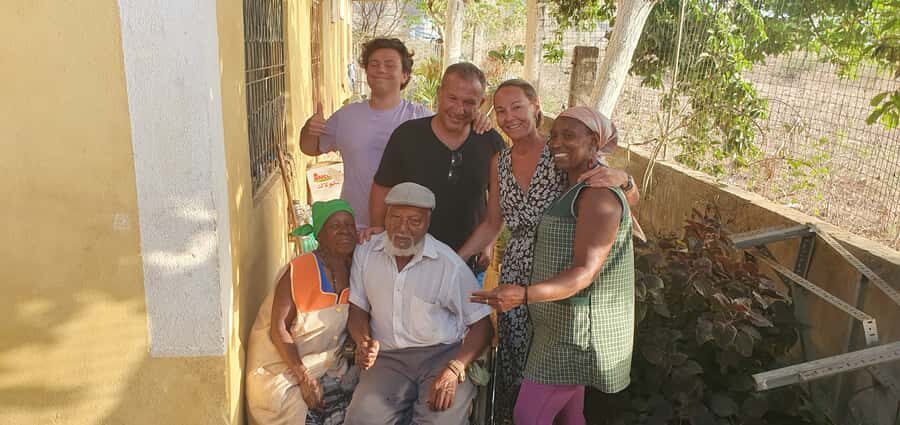
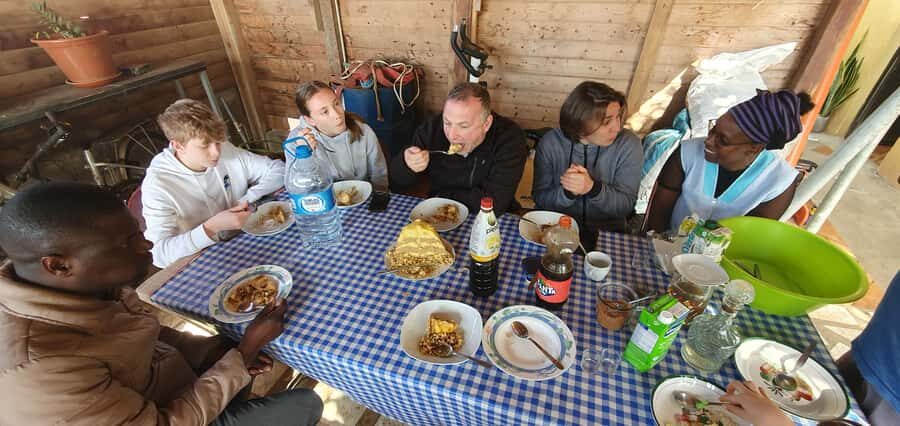
Lunch in this tour is hosted as a family moment. You’ll prepare traditional dishes, then sit down for family lunch (food tasting).
This is where you’ll feel the hospitality most clearly. In the reviews, people highlight that Eloisa and her family take care of guests, keep the mood friendly, and make you feel included rather than managed. That’s a big deal. When a tour is run from a home, you can tell fast whether guests are treated like interruptions or like friends for the day.
Food tasting also supports conversation. You’ll likely want to ask what something is, how it’s made at home, and what makes it work. And because you helped cook earlier, your questions will make sense to the people cooking.
One more detail worth noting: you’ll learn from more than one person. The inclusion of an older woman teaching traditional dish secrets adds depth. Even if you’re not fully catching every word, you’ll still absorb the practical “how” through observation and guidance.
Dance Session: The Fun Ending That Doesn’t Feel Staged
At the end, you’ll join a dance session with Eloisa and her family. In one review, people specifically mentioned dancing with Eloisa and her kids, which matches the overall vibe of the day: shared energy, not a scripted show.
Dance is one of the best ways to end a cooking-heavy day. Food teaches you taste and technique. Dance teaches you rhythm and belonging. It’s also a quick way to break the last bits of social distance, so you leave with more than photos.
The best part is that the dance moment is integrated into the day, not bolted on like an add-on. It feels like the family’s evening tradition, adapted to include you.
If you’re shy, don’t worry. You’re not expected to perform at a professional level. It’s more about joining in and letting the mood carry you.
Price and Value for an 8-Hour Santiago Island Day
At $106 per person for about 8 hours, this tour can feel like a fair deal if you measure value the right way.
Here’s why it’s not just “a sightseeing cost”:
- You get hotel pickup and drop-off, which protects your time and reduces travel stress.
- You’re not only eating; you’re preparing traditional plates with guidance.
- The day includes family lunch and tasting, plus sugar cane juice through multiple stages.
- You get culture through market interaction, a cooking setup using a three-stone stove, and a dance session.
So yes, you’re paying for access to people and their time. But you’re also paying for a tightly packed day of hands-on culture, not a long ride with a single stop. That’s the sweet spot for real-value experiences.
One more thing: the tour runs as a private group, which can make the experience feel smoother and more personal than group tours where you’re squeezed into the edges of someone else’s day.
If you’re comparing options, don’t only look at the price. Compare the amount of active participation you’ll have.
Language Support and What That Means for Your Comfort
The live tour guide supports French, English, and Portuguese. If you speak one of those, you’ll likely find it easier to ask questions during the cooking process and to understand what you’re buying at the market.
Even if you don’t speak the language perfectly, the day still works because so much is shown with hands-on steps: how ingredients are handled, how the stove is used, and how the juice process works. Translation just helps you connect deeper.
In the reviews, guides like Malory and Ze were mentioned, along with Eloisa and Fernando. That mix of people seems to help the day run smoothly and keep it friendly, especially for first-time visitors.
Who Should Book This Tour, and Who Should Skip It
This is a great match if you:
- want a local home experience on Santiago, not only viewpoints
- enjoy cooking and learning practical techniques
- like market culture and chatting with people while you shop
- want a day that ends with movement and fun, through dance
It’s not a good fit if you:
- have food allergies, since you’ll prepare and taste traditional dishes
If you’re traveling as a couple or solo, a private group can make the day feel less crowded and more personal. If you’re traveling with kids, the dance session with Eloisa’s family may be the highlight, but you should still consider how interactive cooking and farm-house time will feel for them. (The tour description doesn’t specify kid ages, so you’ll want to gauge comfort.)
Should You Book This Day with Locals on Santiago?
If your idea of a great day in Cape Verde includes real people, home cooking, market ingredients, and a finish that feels joyful, then yes, I think you should book this. The strongest reason is the structure: Assomada market to farm-house cooking to lunch to sugar cane to dance. It’s a full chain, not a collection of disconnected stops.
Book it especially if you care about learning how locals cook and live, not just what the food is called. The three-stone stove lesson and couscous teaching feel like the kind of skill transfer you can’t get from a restaurant meal.
Skip it if food allergies are part of your planning, because this experience includes preparing and tasting.
If you want a Santiago Island day that’s hands-on, warm, and memorable for more than one photo, this is one of the best ways to spend your time.