REVIEW · ASSOMADA
Santiago Island Experience
Book on Viator →Operated by RURAL TOURS · Bookable on Viator
One day on Santiago feels like three different worlds. This private Santiago Island circuit strings together Assomada’s everyday life, big mountain views at Serra Malagueta, and time to actually swim at Tarrafal.
I especially like the mix of places that are famous and places that feel local—Eco Centro for fauna and flora, then Assomada for markets, church, a museum, and the huge Kapok tree over 700 years old. The other big win is the human factor: guides like Ed, Eddie, and Edimilson are punctual, speak strong English, and will adjust the day to match what you care about; one guide even made sure the pace felt easy and safe throughout. The main drawback to keep in mind is the tour needs good weather, so cloudy or rainy conditions can mean a date change.
In This Review
- Key points worth knowing
- Why this Santiago circuit works (and doesn’t waste your time)
- Morning pickup and the interior-first route
- Eco Centro in São Domingos: fauna and flora, without pretending it’s a zoo
- Assomada markets and the 700+ year Kapok tree
- Serra Malagueta Natural Park at around 1000 meters
- Resistance Museum and Rabelados: history you can actually connect to
- Tarrafal Beach: the payoff swim and lunch break
- East coast road stops: fishing towns and whiting stone
- Santa Cruz banana plantation: a sweet end to the loop
- Price and value: what $131.10 gets you
- The guide is the difference maker on Santiago roads
- Practical tips to make the day feel smooth
- Should you book this Santiago Island tour?
- FAQ
- What time does the tour start, and how long is it?
- Is this a private tour?
- What admission costs are included during the stops?
- What stops are included during the day?
- What if the weather is bad?
- Can I cancel and get a full refund?
Key points worth knowing
- Private group only, so your schedule can flex without crowd pressure
- Serra Malagueta Natural Park gives you altitude views around 1000 meters
- Assomada includes markets, a museum, church stops, and the 700+ year Kapok tree
- Tarrafal Beach is long enough for swimming and lunch
- Resistance Museum and Rabelado history add real context beyond sightseeing
- Mobile ticket plus pickup in the morning makes the day feel simple
Why this Santiago circuit works (and doesn’t waste your time)
This is a full, practical day on Santiago that focuses on variety. You start from Assomada, then you head inland first—so you’re not stuck chasing views late in the day. The route also balances “look” stops (mountains, park views, coastal viewpoints) with “life” stops (markets and historic sites), which is what makes Santiago feel real instead of just scenic.
It also helps that the tour is private. That matters on an island day like this, because roads and timing can be unpredictable. With your own group, your guide can keep things moving and still give you time to ask questions, take photos, or slow down when something catches your eye.
You can also read our reviews of more tours and experiences in Assomada.


Morning pickup and the interior-first route
You begin around 9:00 am, and pickup is part of the experience. From there, the plan heads inland early to explore more of the island in about 5 hours. If you like the idea of seeing the center of Santiago rather than only the coast, this order makes sense.
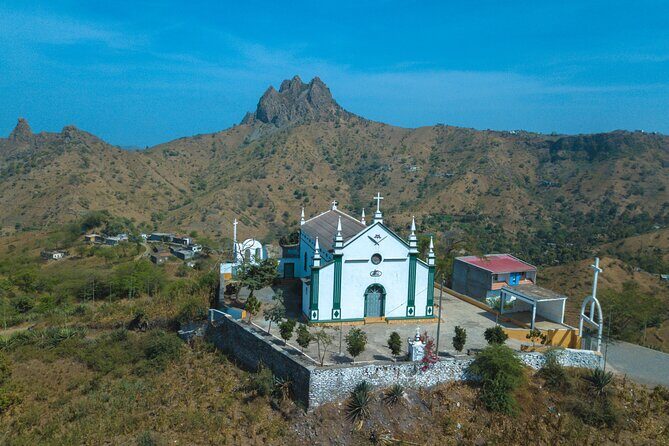
Along the way, you’ll also get short stops to admire the island’s dramatic terrain—there’s time to pause in the areas of Orgãos and Picos for two impressive mountains. These stops aren’t meant to be long hikes. They’re quick photo-and-view breaks that give you a sense of how Santiago is built: steep, volcanic, and instantly different from the flatter coastal areas.
If you hate rushing, the good news is that the day is designed as a sequence of manageable stops. The trick is to show up ready for a driving day: comfy shoes, sunscreen, and water help you enjoy the moments instead of thinking about logistics.
Eco Centro in São Domingos: fauna and flora, without pretending it’s a zoo
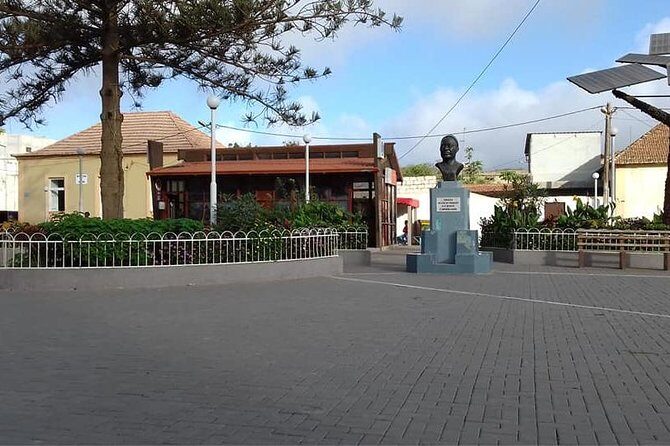
One of the first stops is Eco Centro in or near São Domingos. Expect around 30 minutes and free admission. This is the kind of place that’s easy to appreciate even if you don’t plan to be super “into plants.”
What I like here is the pacing. You’re not forced into a long lecture or a museum-style program. You can simply wander, look closely, and learn what you can in the time you have. If you’re the type who notices bird calls, leaf textures, and how people talk about local nature, you’ll get more out of this stop than you might expect.
Potential downside: Eco Centro is short. So if you want a deep, slow nature walk, you’d likely want to pair this tour with an extra nature outing later. For what this day tour is trying to do—cover lots of Santiago in a short window—it works well.
Assomada markets and the 700+ year Kapok tree

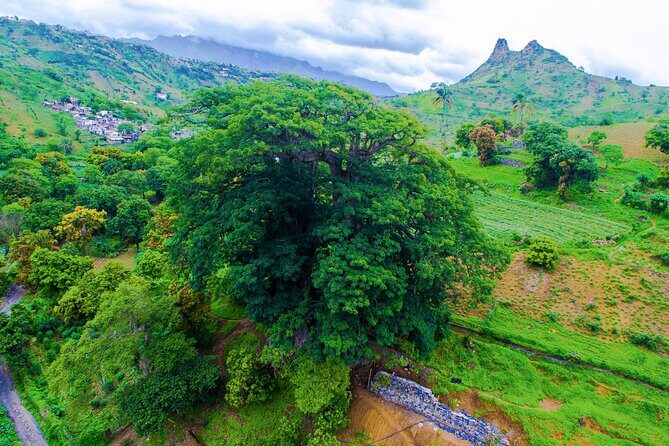
Assomada is where you start to feel the island’s daily rhythm. This part of the day includes major city highlights: two famous markets, a church, and a museum. There’s also a stop for the biggest and oldest Kapok tree in Cabo Verde, estimated at more than 700 years.
That Kapok tree stop is worth treating like a mini “pause.” Shade helps. It gives you a moment to breathe in the middle of a long driving loop. And it also works as a reminder that Santiago isn’t only about views—there’s a long human timeline here too, planted into the geography.
Here’s a practical detail you’ll appreciate: if your day lines up with market activity, the tour can include extra market time. Market day is Wednesday and Saturday. Even if it isn’t market day, Assomada still gives you enough everyday motion to feel connected to local life.
Serra Malagueta Natural Park at around 1000 meters

Next comes Serra Malagueta Natural Park, with about 20 minutes on-site and free admission. At roughly 1000 meters altitude, the air and the sightlines change fast. The main payoff is the view: you get that “from above” look that makes Santiago feel bigger than it does on a map.
Why this stop is valuable: it gives you a contrast to the coastal beach later. You’re not just hopping between towns; you’re changing altitude and perspective. That makes the later Tarrafal time feel more like a payoff than just another stop.
Small consideration: with short time on the ground, you’ll want to keep your camera ready and move efficiently. If the weather turns, park views can be more limited, which ties back to the tour’s stated weather needs.




Resistance Museum and Rabelados: history you can actually connect to
This tour doesn’t ignore history. There’s a Resistance Museum stop of about 20 minutes, and the admission is included. It fits into the day as an explanation for what you’re seeing around you: Santiago has stories that shape how communities remember the colonial past.
Then you move to the Rabelado community (Spinho Branco) for about 30 minutes. This is tied to resistance during Portugal’s colonial era, specifically mentioning rebellion in 1941. Even with limited time, this part helps you understand why the island’s culture and identity matter. It’s not just a photo stop.
The only caution: history stops can feel a bit “in the middle” if you’re visiting strictly for scenery. But if you like context—if you want to know what shaped the places—you’ll probably find these stops are the most meaningful pieces of the day.
Tarrafal Beach: the payoff swim and lunch break

After the inland and history segments, the day heads to Tarrafal, described as the island’s most touristic city and known for the most beautiful beach on Santiago. The beach stop is about 1 hour, and there’s free admission.
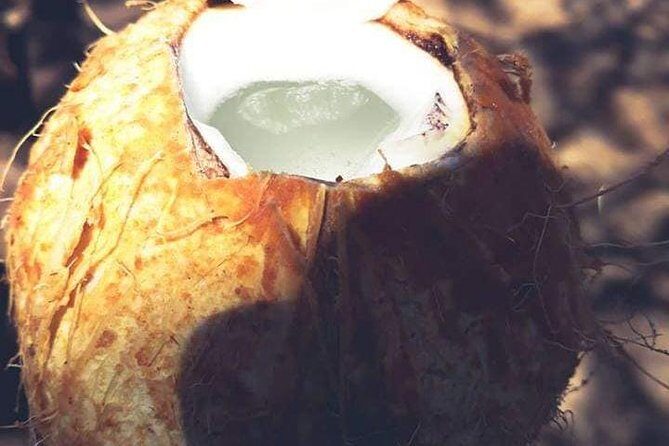
This is the segment that turns the tour from interesting to satisfying. You get real time to swim, plus time to have lunch. One review-style detail that matches the overall vibe: people talk about walking the beach after swimming and grabbing simple refreshment along the way. If your day includes little food pauses like fresh fruit or coconut drinks, Tarrafal is often where that energy shows up.
Practical note: one hour goes quickly. If you want a longer beach day, treat this stop as the best “sample.” You’ll still likely enjoy it, but you’ll probably understand why many people return to Tarrafal separately for the full beach experience.
East coast road stops: fishing towns and whiting stone
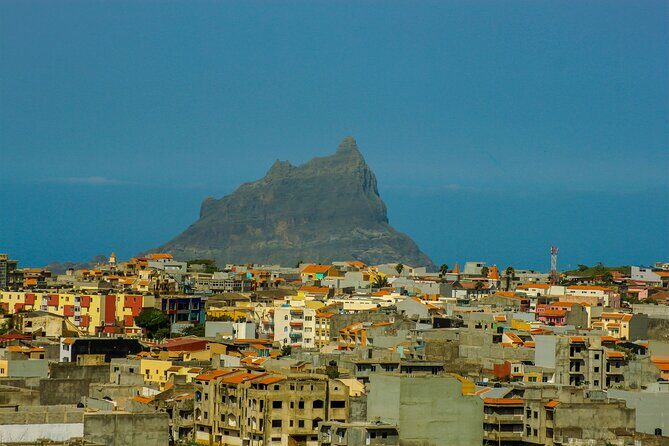
The tour then moves along the east coast road with a few short scenic/cultural stops. You’ll pass through Calheta de Sao Miguel (St. Michael’s Calheta) for about 20 minutes. It’s described as a fishing area, so you’re meant to get a sense of how coastal work shapes daily life.
After that, there’s a stop at Pedra Badejo (Whiting Stone) for around 20 minutes. This one is more “see it, appreciate it, move on” than anything you’ll fully decode in one stop—but it adds variety. It keeps the day from feeling like only towns and beaches.
If you like photography, these coast stops can be the “catch the light” moments of the day—especially compared with the inland heat and the park altitude.
Santa Cruz banana plantation: a sweet end to the loop
Finally, you head to Santa Cruz to visit the largest banana plantation. This is a good ending because it shifts the focus from history and views to food production and everyday economics.
Why it works at the end: after the driving and the coastal stops, it’s an easy, interesting way to wrap up the day without needing another intense viewpoint or long walk. If you like seeing how crops actually grow—rather than only seeing fruit in stores—this is the kind of stop that can stick with you.
Price and value: what $131.10 gets you
At $131.10 per person, the value comes from how much the tour tries to include in one go. You’re getting a private 5-hour day with pickup, a planned sequence of inland and coastal highlights, and a schedule that keeps admission costs largely covered.
Admission details in the day are mostly free: Eco Centro, the markets, Serra Malagueta Natural Park, Tarrafal Beach, Rabelado community, Calheta, and Pedra Badejo are listed as free admissions at their stops. The Resistance Museum admission is included. That alone helps your budget because museums and special sites can add up quickly.
Is it “cheap”? Not really, but it’s fair for what you get: private time, morning pickup, and guide-led navigation across multiple distinct parts of the island.
One more value point: the day is typically booked about 14 days in advance on average. That suggests people plan this as a main Santiago activity rather than a last-minute add-on. If you’re there on limited days, booking earlier is smart.
The guide is the difference maker on Santiago roads
On a route like this, your guide isn’t a bonus. They’re the backbone. This tour’s guides—names that come up include Ed, Eddie, and Edimilson—are described as punctual, friendly, and attentive. The best part: they’re willing to adjust the day to your interests instead of running you through a rigid checklist.
Language also matters. Several notes highlight that English is strong, so you can actually understand the story behind the places, not just hear directions.
And yes, there’s also the simple comfort factor: guides help you feel safe and not rushed. On island roads, that counts. You spend more energy enjoying the stops and less on worrying about what comes next.
Practical tips to make the day feel smooth
Here are the things that help most, based on how this tour is structured:
- Plan for driving: you’re moving across interior, park areas, and then out toward the coast. Wear comfortable shoes.
- Bring sun protection: you’ll be in exposed viewpoints and at Tarrafal’s beach.
- Keep water handy: even when stops are short, it’s a long enough day to need it.
- Use your hour at Tarrafal wisely: if you want a swim and lunch, split that time early instead of waiting until the end.
- Ask for small local tastings: one experience described fresh papaya, coconut milk, and a dinner stop with Kefy. Not every day will be identical, but it’s the kind of local touch a guide may try to work into your plan if timing allows.
Should you book this Santiago Island tour?
You should book if you want a smart first look at Santiago that covers inland viewpoints, historic meaning, real town life, and a proper beach break—all in about half a day’s timeframe. It’s also a good choice if you prefer a private setting where the guide can adapt.
You might skip it if your priority is a slow, long nature hike or a full beach day. This tour is paced for variety, not for lingering.
My quick decision rule: if you like day trips that feel like a highlight reel with context, this one makes sense. If you only want one theme—just beach, just nature, or just museums—you’ll probably enjoy it more by picking a more focused outing.
FAQ
What time does the tour start, and how long is it?
The tour starts at 9:00 am and runs for about 5 hours (approx.).
Is this a private tour?
Yes. It’s listed as private, meaning only your group participates.
What admission costs are included during the stops?
Eco Centro, Assomada market(s), Serra Malagueta Natural Park, Tarrafal Beach, Rabelado community, Calheta de Sao Miguel, and Pedra Badejo are listed as free admissions at their stops. The Resistance Museum admission is listed as included.
What stops are included during the day?
The day includes Eco Centro, stops around Orgãos and Picos for mountain views, Assomada city highlights (markets, church, museum, Kapok tree), Serra Malagueta Natural Park, the Resistance Museum, Tarrafal Beach, Rabelado community, Calheta de Sao Miguel, Pedra Badejo, and a visit in Santa Cruz to the largest banana plantation.
What if the weather is bad?
The tour requires good weather. If it’s canceled due to poor weather, you’ll be offered a different date or a full refund.
Can I cancel and get a full refund?
Yes. There’s free cancellation up to 24 hours in advance for a full refund. If you cancel less than 24 hours before the experience starts, the amount paid is not refunded.