REVIEW · CAPE VERDE
Sal Island: Catxupa Cooking Class with a local family
Book on GetYourGuide →Operated by Bu Country Tours · Bookable on GetYourGuide
A home kitchen in Sal can teach you more than a restaurant ever will. I like the hands-on Catxupa format, and I also love the clear sense of local-family hospitality that makes the meal feel personal. You’ll learn a classic Cape Verde dish and come away with a recipe you can actually cook again later.
One consideration: this is a small-group, home-style class. If you expect a polished, restaurant-grade setup or lots of long explanations, the experience may feel more relaxed and practical than formal.
In This Review
- Key things to know before you go
- A Home-Style Catxupa Lesson in Sal
- Getting to the Class: Pickup, Small Group, Separate Entrance
- Meet the Guides: Melissa and Alejandro
- What You’ll Cook: Catxupa, Plain Ingredients, Big Results
- A Hands-On Flow: From Ingredients to Your Own Plate
- Stories and a Little Dance: Culture Built Into the Meal
- The Meal Part: Eat What You Make, Then Talk About It
- A Recipe You Can Actually Recreate at Home
- Price and Value: Is $41 a Good Deal?
- Who This Class Fits Best (and Who Should Skip It)
- Logistics You’ll Want to Plan Around
- Should You Book the Catxupa Cooking Class in Sal?
- FAQ
- Where does the cooking class take place?
- How long is the Catxupa cooking class?
- What is the price per person?
- How many people are in the group?
- Are hotel pickup and drop-off included?
- What dish will I learn to make?
- What’s included in the class?
- What languages are available for the live guide?
- Do I need to pay right away?
- Is there free cancellation?
Key things to know before you go
- You’ll make Catxupa with the ingredients fully provided, so you can focus on cooking instead of sourcing supplies.
- Hotel pickup and drop-off keep the timing easy, especially since the activity lasts about 2 hours.
- Small groups (up to 10) help you ask questions while you work.
- Guides speak English, French, and Portuguese, so communication stays smooth.
- Melissa and Alejandro have both been highlighted for warm, professional guidance.
- You may get more than cooking, including a short dance lesson and story time tied to Cape Verdean life.
A Home-Style Catxupa Lesson in Sal
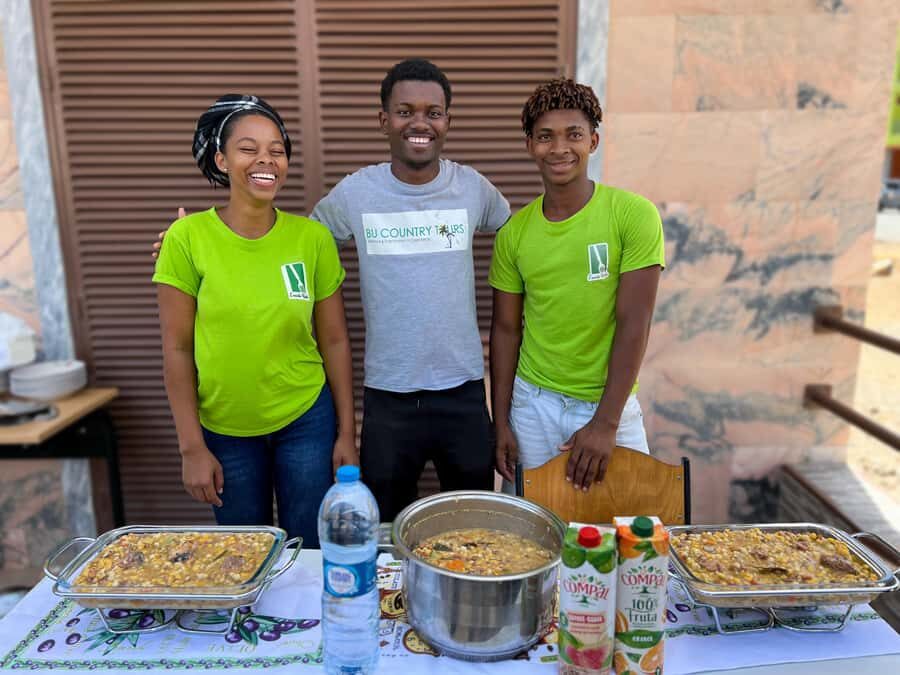
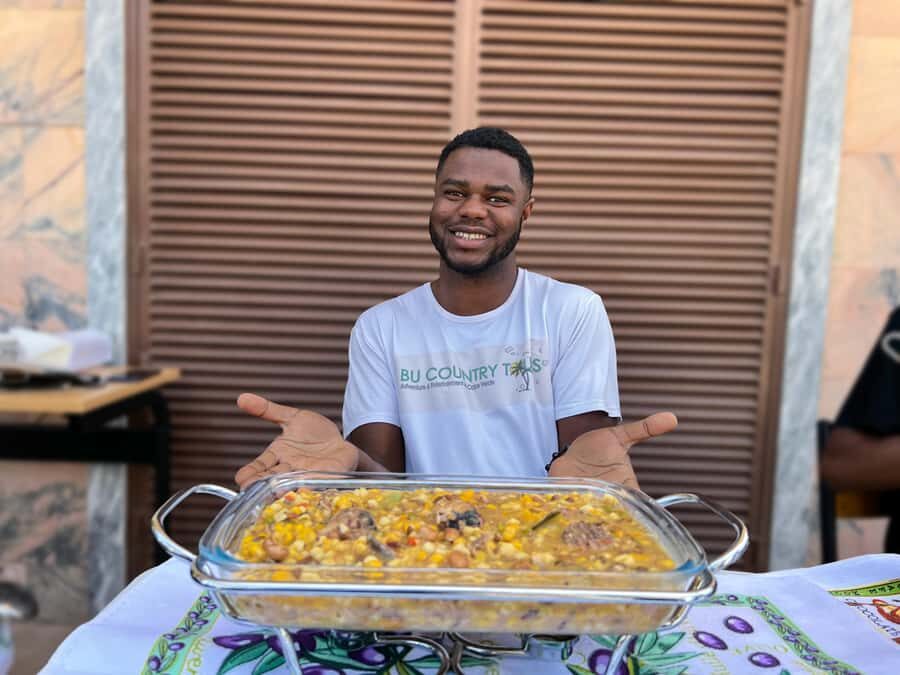
Catxupa is one of those dishes that people in Cape Verde talk about like it’s part of everyday life. It’s not fussy food. It’s comfort food with real structure: corn and beans form the base, then you add your choice of meat or fish. During this class, you learn how those pieces come together into one filling, protein-packed meal.
What makes this experience worth your time is the way it’s built around doing the work. You’re not watching from a distance. You’re cooking alongside a local family and a guide, with the ingredients already handled. That matters because the best part of a food class is momentum: you want to move from ingredient to plate without stopping to figure out what to do next.
You also get to eat what you make. That might sound obvious, but in many short classes, the meal is just a snack. Here, the class is set up around the full result of your cooking, so you leave with both the taste of Cape Verde and the method behind it.
You can also read our reviews of more tours and experiences in Cape Verde.



Getting to the Class: Pickup, Small Group, Separate Entrance
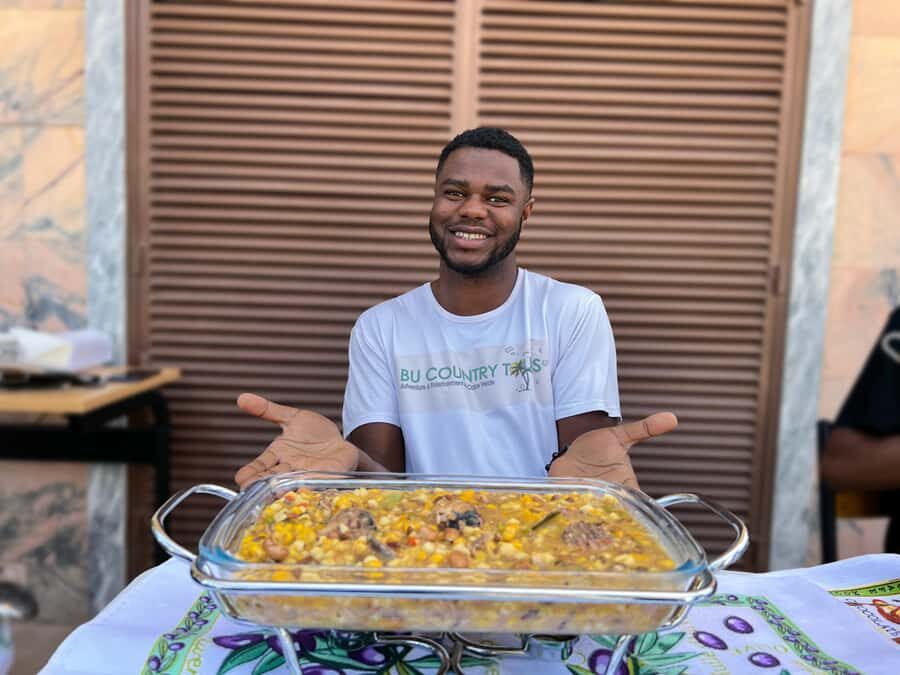
This runs in a compact 2-hour window, which is great if you’re balancing beach time with real local experiences. Pickup is included, and you’re asked to wait in the hotel lobby about 10 minutes before your scheduled time. After the class, you’ll be dropped back at your accommodation.
The group stays small—limited to 10 participants. That helps in two ways. First, you get more direct attention while you’re cooking. Second, the flow stays calmer, so you spend less time waiting for instructions and more time actually making decisions at the stove.
There’s also a separate entrance to help you skip the line. Even if the place isn’t chaotic, saving time means you start sooner and keep the class feeling focused.
Meet the Guides: Melissa and Alejandro
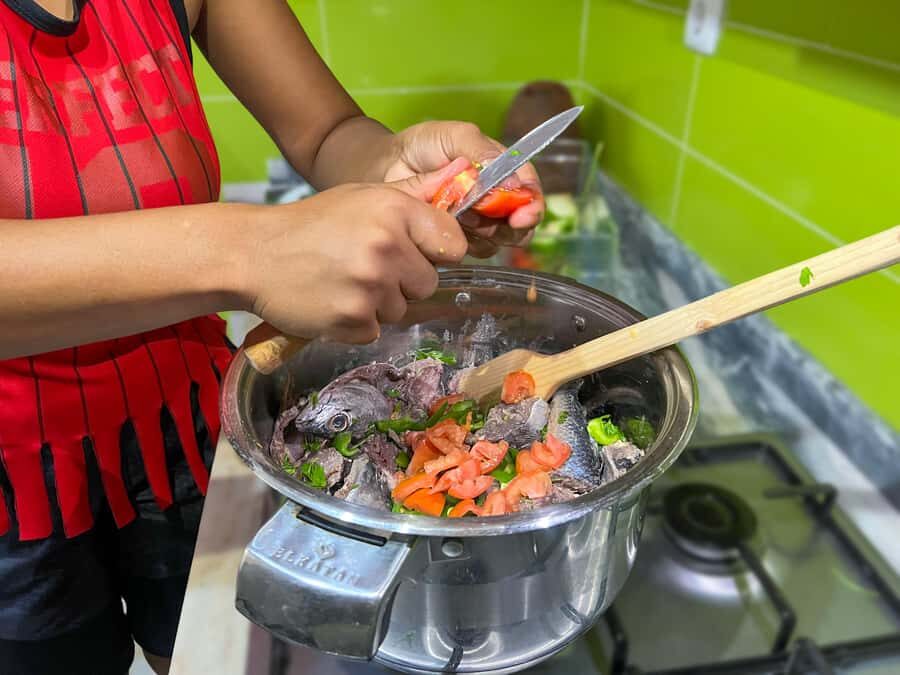
The class is led by a live tour guide, with English, French, or Portuguese depending on what’s running. In the feedback for this experience, two names come up in a positive way: Melissa is described as welcoming and professional, and Alejandro is called out as top-notch.
Why that matters: with cooking, the difference between a good and great class isn’t just recipes. It’s the ability to explain what you’re doing in a way that clicks. When the guide is friendly and clear, you’re more likely to pick up the small technique choices—like getting the texture right and balancing the final flavors.
What You’ll Cook: Catxupa, Plain Ingredients, Big Results
You’ll be learning the most famous dish in Cape Verdean cuisine: Catxupa. The core idea is simple and satisfying:
- corn
- beans
- meat or fish (your choice)
You don’t need to guess how to build it from scratch because the ingredients are included. That also means you can pay attention to the cooking steps themselves—how to combine the base, how the dish comes together, and what makes the final plate feel like Catxupa rather than just a corn-and-bean stew.
If you’ve never had Catxupa before, don’t expect it to taste like any one famous European dish. It’s its own thing: hearty, filling, and designed for sharing. And because it uses common pantry items (corn and beans) plus protein, it’s practical food. That’s a big reason people keep making it long after the special-occasion meals.
A Hands-On Flow: From Ingredients to Your Own Plate
This class is structured around active participation. You’ll be pulled into the process at the home kitchen level—rolling up your sleeves and working through what you need to make Catxupa.
While the exact sequence can vary with the household and the day, the overall rhythm stays the same: ingredient prep, assembling the dish, and then cooking toward a final plate you can eat. You’re not just learning a concept. You’re learning how it behaves while it cooks.
Here’s how to get the most from that part:
- Watch what the cook does first, then do the next step yourself.
- Ask questions before you rush to the next ingredient. Once the dish is moving, it’s harder to pause.
- Pay attention to the point where it shifts from ingredients to a unified meal. That’s where your at-home success comes from later.
Because it’s a local family setting, the class has a lived-in feel. You’ll see how they prepare food day-to-day, even if the session is more guided than a normal cooking day.

Stories and a Little Dance: Culture Built Into the Meal
One of the standout elements in the experience is how it blends food with Cape Verdean life. The class isn’t only recipe talk. It includes sharing of history and culture, and in at least one case, a short course in dance.
That’s valuable for two reasons. First, food is easier to remember when you understand the role it plays in daily life. Second, cultural context makes your meal feel more intentional. You’re not just eating something tasty—you’re connecting it to the people and traditions behind it.
If you’re the kind of traveler who likes your activities to have a human face, this format works well. You’re learning at the pace of a family, not through a script.
The Meal Part: Eat What You Make, Then Talk About It
When it’s time to eat, you’re not stuck with a separate tasting plate. You’ll enjoy the Catxupa you prepared as the payoff to the class.
This is when the dish makes sense. During cooking, flavors can feel subtle or hard to judge. After cooking, you can clearly taste the balance of corn, beans, and the added meat or fish. It’s also where conversation tends to happen naturally—questions, explanations, and a bit of friendly exchange around the table.
A practical tip: take a small moment before your first bite to think about what you did most recently. That helps your memory later when you try to cook the recipe at home. Cooking success is less about copying and more about remembering what each step is doing.
A Recipe You Can Actually Recreate at Home
A lot of cooking classes claim you’ll be able to make the dish again. What you want is something you can realistically repeat when you’re back in your own kitchen.
This one is set up that way. The class is designed so you learn how to make Catxupa from start to finish using the same structure: corn, beans, and your selected protein. Even without a printed binder in front of you, you’ll leave with the understanding of how the dish is built and why it works.
When you cook it later, you’ll likely focus on:
- building the base with corn and beans
- adding meat or fish in a way that fits the overall dish
- getting the final texture that makes it feel like Catxupa, not just ingredients
If you want to make it even easier at home, treat the first attempt as a practice run. Your goal isn’t perfection. It’s getting close to the rhythm and balance you learned here.
Price and Value: Is $41 a Good Deal?
At $41 per person for a 2-hour class, you’re paying for more than a cooking lesson. You’re paying for ingredients, pickup and drop-off, a live guide, and a small-group format with local-family involvement.
Here’s why that can be good value in Sal:
- You don’t need to buy ingredients or do prep yourself.
- Hotel pickup reduces hassle and time.
- The small group size means you’re more likely to get real guidance instead of generic instructions.
- You get an actual meal outcome, not just samples.
The only time the price might feel steep is if you’re purely interested in eating rather than learning. If your goal is just a quick lunch, you might spend less elsewhere. But if you want the skill and the recipe method, $41 becomes more reasonable because you’re taking home something you can use again.
Who This Class Fits Best (and Who Should Skip It)
This is a smart choice if you:
- want a hands-on food experience in Cape Verde, not just sightseeing
- like learning from locals in a home setting
- enjoy cooking and want a recipe you can repeat
- prefer small groups with a guide (max 10)
It may be less ideal if you:
- dislike cooking or don’t like structured activities with a short time limit
- want a long, restaurant-style dining experience with lots of courses
- expect a high-tech, equipment-heavy cooking studio
Still, if you can be flexible and enjoy practical learning, you’ll likely find the format very satisfying.
Logistics You’ll Want to Plan Around
Because pickup and drop-off are included, the main planning is simple: be ready in your hotel lobby around the pickup window. The class itself lasts about 2 hours, so it’s also easy to fit between beach time and dinner plans.
Language options (English, French, Portuguese) are helpful. Even if you speak only one of these, you should be covered depending on the session. If you’re part of a mixed language group, the guide’s job is to keep explanations clear while you cook.
Should You Book the Catxupa Cooking Class in Sal?
I’d recommend booking if you want an authentic Cape Verde meal experience that includes real participation. The best reason to go is the combo: a local family kitchen plus a Catxupa recipe built around corn, beans, and meat or fish. Add a small group, pickup convenience, and guides like Melissa and Alejandro being noted for good energy, and the value looks strong.
Skip it only if you’re looking for a quiet, spectator-only meal. This class works because you do the cooking. If that’s your style, you’ll leave with both a full plate and a dish you can recreate.
FAQ
Where does the cooking class take place?
It takes place on Sal, Cape Verde, with pickup from your accommodation and a drop-off afterward.
How long is the Catxupa cooking class?
The experience lasts 2 hours.
What is the price per person?
The price is $41 per person.
How many people are in the group?
The group is limited to 10 participants.
Are hotel pickup and drop-off included?
Yes. Hotel pickup and drop-off are included, and you should wait in the lobby about 10 minutes before pickup.
What dish will I learn to make?
You’ll learn to make Catxupa, Cape Verde’s famous dish made with corn, beans, and meat or fish.
What’s included in the class?
It includes all the ingredients for Catxupa, a local cook and meal, and the learning experience with a local family.
What languages are available for the live guide?
The live guide speaks English, French, and Portuguese.
Do I need to pay right away?
You can use reserve now & pay later, meaning you can book your spot and pay later.
Is there free cancellation?
Yes, you can cancel up to 24 hours in advance for a full refund.