REVIEW · SANTA MARIA
Turtle Experience in Sal island
Book on Viator →Operated by Spot Travel Tours · Bookable on Viator
Sea turtles do their work after dark. On Sal in Santa Maria, you can witness the full nesting sequence on the beach, explained step by step by your guide and guided by one rule: patience.
I like two things about this experience. First, the hotel pickup means you’re not scrambling for transport at night. Second, the group stays small, with a maximum of 16 travelers, so the guide’s instructions are easier to follow.
One possible drawback: you’re watching an animal that makes the call. If the turtle doesn’t feel safe, it won’t come ashore, so you may spend more time waiting than you expected.
In This Review
- Key things to know before you go
- Night Turtle Nesting on Sal: what you’re really seeing
- The 8:00 PM pickup and timing that can make or break it
- On the beach: listening first, then watching the turtle decide
- From digging to egg-laying: the sequence you’ll remember
- Group size up to 16: why that number matters at night
- Comfort tips for a 3-hour evening on sand
- Price and value: is $82.22 worth it?
- Who should book this turtle experience on Sal
- A quick note on operators and late pickup risk
- Should you book Turtle Experience in Sal?
- FAQ
- What time does the Turtle Experience start?
- How long does the experience last?
- Is hotel pickup included?
- What happens once we reach the beach?
- How many eggs can the turtle lay during this experience?
- Why do we need to wait during the tour?
- What physical effort is expected?
- How do tickets and confirmation work?
- Can I cancel for free?
Key things to know before you go
- 8:00 PM start time with hotel pickup, so plan your evening around it
- Small group (up to 16), which helps the guide manage the beach area
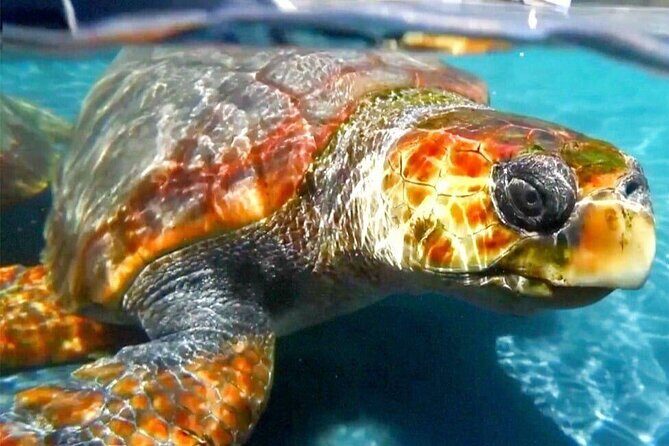
- You’ll see the whole nesting cycle: approach, digging, egg-laying, and camouflaging
- Expect a wait because the turtle is cautious and only comes ashore if it feels safe
- Egg count is real and specific: typically 65 to 100 eggs
- You’re done with a relaxed finish: return to your hotel after the experience
Night Turtle Nesting on Sal: what you’re really seeing
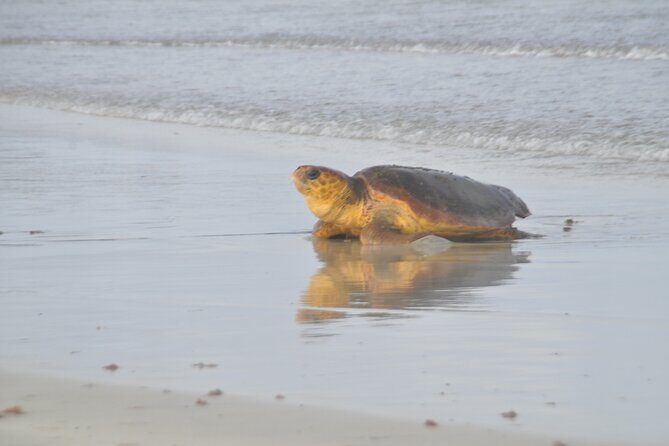
This tour is built around one moment in the turtle’s life: nesting. The evening starts with you heading out from Santa Maria hotels and arriving at the beach, where the guide sets expectations clearly before anything starts. You’re not just looking for a turtle silhouette in the dark. You’re learning what the animal is doing and why.
The core of the experience is the nesting process itself. You’ll watch the turtle go up the beach, pause, and search for the right spot. From there, it prepares the ground—digging with focus, as if it’s working from a very specific checklist.
The most educational part is what happens when conditions aren’t right. If the sand doesn’t feel suitable, the turtle will keep looking and move to another spot to dig. Then it lays between 65 and 100 eggs, covers the nest, and camouflages the area before returning to the sea.
That sequence turns a wildlife sighting into a mini lesson on behavior. You’ll come away understanding that turtles aren’t acting on a schedule. They react to safety, sand conditions, and the quiet signals they pick up in their environment.
You can also read our reviews of more tours and experiences in Santa Maria.



The 8:00 PM pickup and timing that can make or break it
This experience starts at 8:00 PM. Pickup is offered, and the group is collected from hotels before you head toward the beach. That’s a big part of the value: you’re paying for an organized evening that removes the hassle of finding a meeting point and getting everyone to the coast.
Still, nighttime tours live and die by timing. One important consideration from real experiences with this kind of pickup-based activity: if pickup runs late, you can lose part of the evening’s best window. So treat the pickup time as firm, not flexible.
My practical advice:
- Be ready at your meeting spot a bit early so you’re not scrambling when the car arrives.
- Keep your phone charged and reachable during the pickup window.
- If you’re traveling with other people, confirm you’re all together before the tour time.
Because the turtle’s behavior drives the timing, being late doesn’t just affect you. It reduces the time you have to wait for the turtle to feel safe enough to start.
On the beach: listening first, then watching the turtle decide
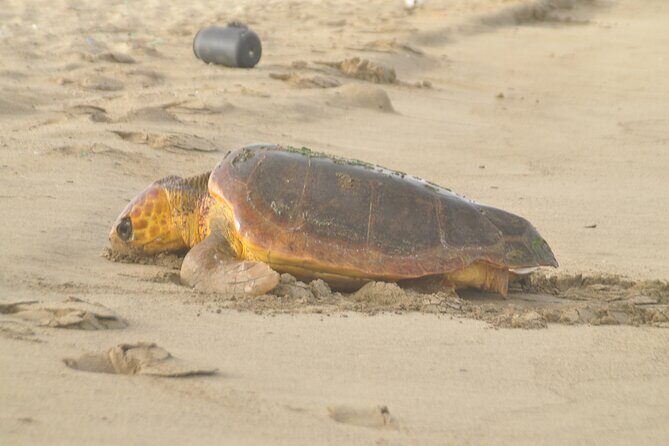
When you arrive at the beach, your guide leads the introduction. This matters more than you might think. Turtle nesting can look like one long pause—until suddenly it isn’t. The guide explains what you’ll see and how the procedure will unfold, so you’re not guessing what each movement means.
Then you wait. This is not filler time. It’s part of the deal.
The turtle is cautious and sensitive to its surroundings. If it doesn’t feel safe, it won’t come ashore. That means the timing can vary, and the action can start later than expected if the beach feels too exposed or too unpredictable.
Once the turtle does commit, you’ll see it work its way up the beach and search for a spot. This isn’t random. It’s selecting a location that fits what the turtle needs in that moment.
Here’s what the guide’s explanation sets you up to notice:
- How the turtle chooses where to dig
- How it adjusts when the sand isn’t right
- How long the egg-laying stage lasts (you can expect it to be deliberate, not rushed)
- How it finishes by closing and camouflaging the nest
It’s a calm kind of drama. No fireworks. No crowd choreography. Just a living animal doing what it came to do.
From digging to egg-laying: the sequence you’ll remember
The most vivid part of this experience is the digging and egg-laying stages. The guide helps you track the steps so you can follow the turtle’s logic, not just the visuals.
The turtle begins by preparing the ground. It may dig, pause, and then decide the spot isn’t suitable. If the sand isn’t good, the turtle looks for another place to make the hole. That’s one of the reasons the experience can take time: the turtle is actively testing and adjusting.
When the hole is ready, egg-laying starts. The range given for this nesting activity is between 65 and 100 eggs. Watching the turtle complete this task is where the experience shifts from interesting to meaningful. You’re seeing the foundation of the turtle’s next generation, done in a way that’s both careful and efficient.
After the eggs are laid, the turtle covers the nest and camouflages it before heading back to the sea. That last step is often overlooked in wildlife tours, but it’s central to survival. Camouflage isn’t decoration. It’s protection.
If you’re the kind of traveler who likes details—how things work, why animals behave the way they do—this portion is going to stick with you.
Group size up to 16: why that number matters at night
A maximum of 16 travelers may sound like a small detail on paper, but at the beach it changes the whole feel. Larger groups can be hard to manage in low light. People stand closer, noise travels more, and it becomes more difficult for everyone to follow the guide’s instructions.
With a smaller group, you’re more likely to:
- Hear the guide’s explanation clearly
- Keep your distance without feeling like you’re fighting the crowd
- Stay patient without the experience turning into a waiting-room vibe
Also, a small group helps the guide control how long you remain and where you stand as the turtle moves. With nesting behavior, space and quiet are part of the experience.






Comfort tips for a 3-hour evening on sand
The duration is listed as 3 hours (approx.). Since you’re waiting for an animal to feel safe, you should dress and plan for a slow rhythm, not a sprint.
A few practical ideas:
- Wear shoes that handle sand. If your feet sink, you’ll notice it during the waiting period.
- Bring something for cooler night air if you tend to run cold. Even warm places can feel different after dark.
- Keep movement low until the guide signals it’s time. Sudden walking and crowding can make waiting less pleasant and can disturb the calm.
- Use your guide’s intro to decide what you’ll do while you wait: listen, observe, take photos if allowed, and stay ready when the turtle starts working.
Moderate physical fitness level is mentioned, which usually means you should be comfortable being outdoors, walking a bit, and standing/waiting. If that sounds like you, you’re set.
Price and value: is $82.22 worth it?
At $82.22 per person, this isn’t a budget-only activity, but it’s not trying to be. The value is in three places.
First, you get hotel pickup plus a guided evening. Night logistics on a holiday island can be expensive in time and hassle if you do it on your own.
Second, you’re paying for a very specific nature moment: the full nesting cycle, not a quick sighting. The guide’s introduction and the structured watching make it more than a lucky glance.
Third, the group size stays limited (up to 16), which usually means less chaos and more attention from the guide.
Where the value can feel lower is outside your control: the turtle is cautious. If it doesn’t feel safe, the action may be delayed or limited. That’s the trade-off with wildlife experiences. You’re paying for the chance to witness something rare, and the animal sets the timetable.
If you’re okay with that uncertainty, the price starts to make sense. If you want a guaranteed, clockwork performance, this type of tour will test your patience.
Who should book this turtle experience on Sal
This tour is a strong fit if you:
- Like wildlife that’s explained, not just photographed
- Enjoy patient observing and want to understand animal behavior
- Prefer guided logistics at night, including pickup and return to your hotel
- Want a small-group evening activity in Santa Maria
It may be a weaker fit if you:
- Hate waiting outdoors for long stretches
- Need strict schedule certainty (the turtle’s comfort comes first)
- Get uncomfortable standing or walking on sand for the length of a 3-hour tour
If you’re traveling with kids, it can still work well, but I’d choose it mainly for families who handle quiet, waiting, and instructions. If your group hates suspense, you might want a more predictable evening plan.
A quick note on operators and late pickup risk
Because pickup is part of the experience, I’d take timing seriously. There is at least one documented case where pickup was about 45 minutes late, causing people to miss part of the experience. That doesn’t mean it always happens, but it does mean you should protect yourself: be ready early, stay reachable, and don’t plan another activity immediately after this tour ends.
Also, the guide’s communication appears to be bilingual in some cases, since explanations have been described in both English and Spanish. If you need one language specifically, it’s worth asking ahead of time what languages will be used that night.
Should you book Turtle Experience in Sal?
Book it if you want an evening that’s educational and calm, built around a real behavior you can follow from start to finish. The chance to see the turtle select a spot, dig, lay 65–100 eggs, and camouflage the nest is the kind of nature encounter that doesn’t feel generic.
Skip it only if you can’t handle uncertainty or long waiting. The turtle decides when it’s ready. Your best outcome comes when you show up prepared to wait, listen, and watch without rushing.
If that sounds like your style, I’d say this is a good use of an 8:00 PM evening in Santa Maria—especially with the small group size and included pickup.
FAQ
What time does the Turtle Experience start?
The tour starts at 8:00 PM, with hotel pickup before you head to the beach.
How long does the experience last?
It lasts about 3 hours (approx.).
Is hotel pickup included?
Yes. Pickup is offered, and you’re returned to your hotel after the experience.
What happens once we reach the beach?
The guide introduces you to the turtles and explains what you’ll see. You then watch the turtle come ashore (if it feels safe), choose a spot, dig, lay eggs, cover and camouflage the nest, and return to the sea.
How many eggs can the turtle lay during this experience?
The turtle lays between 65 and 100 eggs.
Why do we need to wait during the tour?
The turtle is cautious. If it doesn’t feel safe, it may not come ashore, so patience is part of the experience.
What physical effort is expected?
The tour lists a moderate physical fitness level, so you should be comfortable walking on a beach and standing/waiting outdoors.
How do tickets and confirmation work?
You’ll receive confirmation at the time of booking, and the tour uses a mobile ticket.
Can I cancel for free?
Yes. You can cancel for a full refund if you cancel at least 24 hours before the experience’s start time.