REVIEW · SANTA MARIA
Kite Surf Lessons on Sal Island
Book on Viator →Operated by Atlantic Star · Bookable on Viator
Sal wind turns your first kite into real traction. This 2-hour session on Santa Maria aims at real progress in a place built for it, with instruction at Kite Beach by professional instructors. I like the hands-on coaching approach that works for both brand-new riders and people wanting to tighten up technique. I also like the overall vibe people describe: friendly staff, good equipment, and a schedule that fits a day on Sal. One possible drawback to keep in mind: there’s at least one safety-related complaint tied to supervision, so I’d pay attention to how closely the instructor is managing your session.
You do need to be able to swim, with a minimum weight of 35 kg, but there is no age limit. The lesson is designed for a group of two people, which is a good size for learning without feeling lost. Pickup is offered, and for many visitors that matters because you want to spend your energy on the water, not on figuring out logistics.
I also like that you get different times throughout the day to choose from. Cape Verde’s wind is the main ingredient here, but the experience runs only in good conditions, so plan for possible date changes if the wind doesn’t cooperate.
In This Review
- Key things to know before you go
- Sal Island wind: why kite lessons here feel practical
- Finding Atlantic Star at Santa Maria beach (and what pickup changes)
- Your 2-hour lesson: what you’re really signing up for
- Group lessons for two: the sweet spot between private and crowded
- Instructors matter: what Kenny and Jailson get praised for
- Kite Beach sessions: getting time on the water, not just gear
- Safety: the one criticism you should not ignore
- Price and value: is $153.31 worth it for Sal?
- Weather and timing: choosing a time slot that actually works
- Who should book these kite lessons (and who might reconsider)
- Should you book Atlantic Star for kite surfing on Sal?
- FAQ
- How long is the kite surf lesson on Sal Island?
- Do I need to be able to swim?
- Is there a minimum weight requirement?
- Is there an age limit?
- Is pickup included?
- What if the wind or weather is poor?
Key things to know before you go
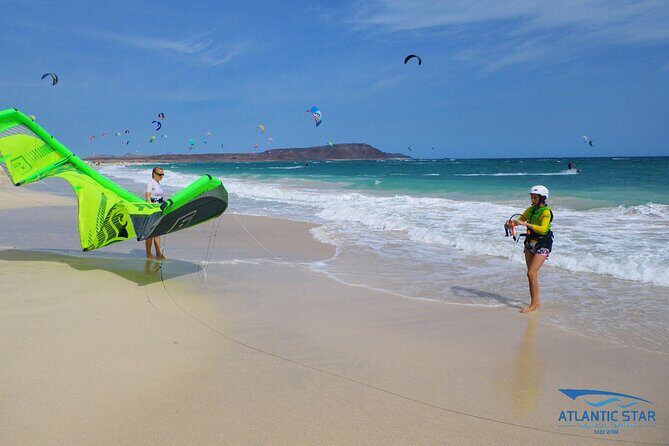
- Sal Island wind is the training tool: the spot is popular for a reason, and the lesson is built around those conditions.
- Two-person grouping helps learning: you’re not stuck watching from the sidelines for your entire session.
- Safety gear and power control are part of the lesson: you’ll be trained with proper setup, including helmet and life vest, and taught how to reduce power when wind increases.
- Instructors can make or break the day: names that come up a lot include Jailson and Kenny, praised for motivation and professional teaching.
- Pickup and short transfers can be included: some sessions begin with hotel-area pickup (like Riu Funana), and you may ride to a nearby training beach (about 10 minutes by car, when needed).
- Strong overall ratings, one safety note: the program shows a 4.8 rating and 94% recommendation, but I’d still take that one safety concern seriously.
Sal Island wind: why kite lessons here feel practical
Sal Island in Cape Verde has a reputation for reliable kiteboarding conditions, and that matters a lot when you’re learning. In a windy place, you can actually practice the basics without waiting all day for the wind to show up. That means your lesson time has a better chance of turning into progress instead of theory.
The instruction is also set up for “first time to improve,” so the school isn’t trying to squeeze everyone through the same exact steps. You’ll be working in a secure on-water setup at kite beach, which is where you want to be when you’re still building comfort with the kite, lines, and board control.
You can also read our reviews of more tours and experiences in Santa Maria.


Finding Atlantic Star at Santa Maria beach (and what pickup changes)
Your meeting point is the Atlantic Star Nautical Center at the beach area of Santa Maria (Santa Maria 4111, Cabo Verde). If you’re staying in Santa Maria, this is the kind of setup that keeps friction low: show up, get checked in, and get suited up.
Pickup is offered, and in the real world that can mean fewer missed minutes. One commonly mentioned pickup point is the Riu Funana area, which is useful if your hotel is in that zone. After that, you might not always kite directly in front of the center. Some sessions use a nearby spot reached by car (around 10 minutes), with the transport handled by the school.
That transfer detail is worth knowing. A 10-minute ride can mean the difference between comfortable learning conditions and a spot that’s less ideal for training.
Your 2-hour lesson: what you’re really signing up for
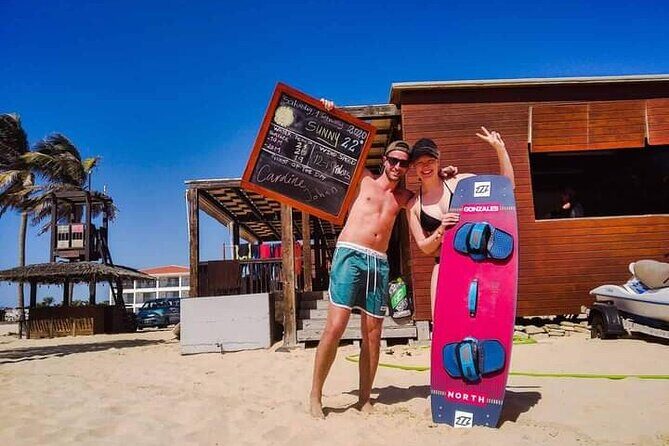
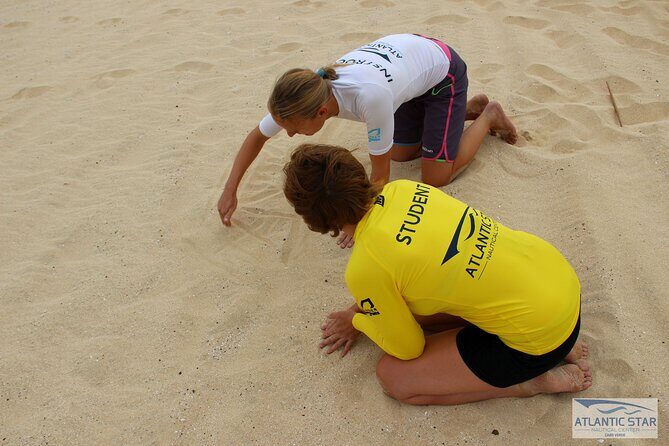
This is listed as a 2-hour experience, and it’s framed as a learning session on a kitesurfing hotspot. In practice, the value of a lesson like this comes from a tight coaching loop: quick explanations, direct corrections, and hands-on time with the equipment.
Because it’s designed for all levels, the first part of your session will usually focus on setup and control basics. That includes kite handling fundamentals and how to manage kite power safely. One detail that stands out from safety guidance: you may be instructed to release the bar to reduce power when wind increases. That is the kind of skill that helps you stay calm and in control when conditions shift.
You’ll also get geared up with standard safety items. The program emphasizes helmet and life vest use in the on-water instruction process, and that’s a big deal for first-timers who are still learning how their body reacts with the wind and pull.
Group lessons for two: the sweet spot between private and crowded
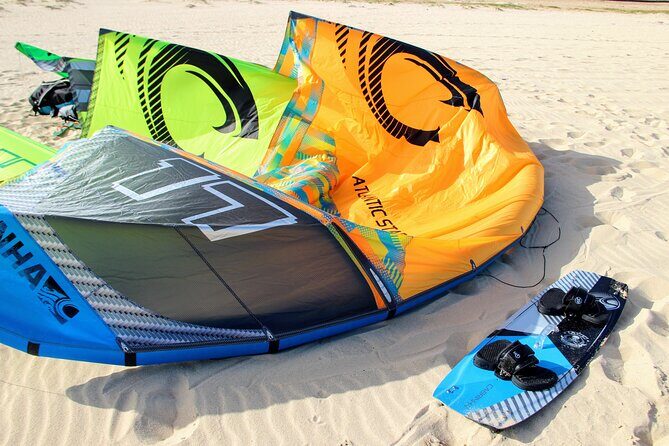
The lessons are designed for a group of two people, which is a smart learning setup. Too many students at once usually means less attention per person. Too small (one-on-one only) can be great, but it’s not always the most cost-efficient way to get coaching.
A two-person group keeps the energy up while still allowing real coaching. It also makes scheduling easier because the operator can match you with another participant rather than leaving you waiting for a solo slot.
The listing also notes a private tour/activity setup, meaning only your group participates. So even though it’s technically a “group lesson,” you’re not joining a big class of random strangers.
Instructors matter: what Kenny and Jailson get praised for
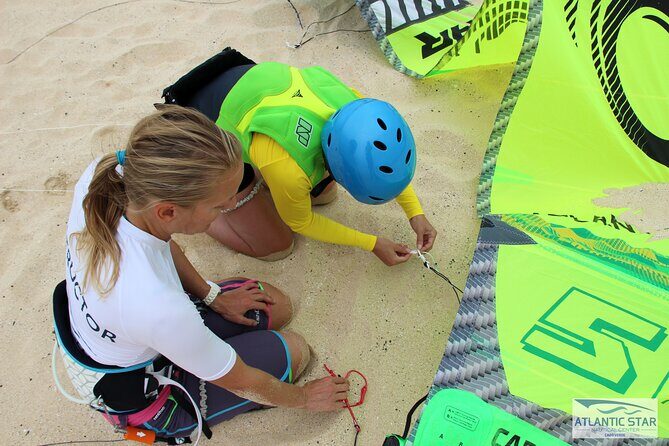
When people get excited about a kite school, it’s usually about the instructor. At this center, two names come up again and again: Jailson and Kenny.
Jailson is repeatedly described as motivating and professional, with teaching that helps people progress fast. Kenny gets mentioned as well for being friendly, pedagogical, and good at explaining what to do so your body can follow. When someone is learning kite control, clarity is everything. If your instructor can simplify your next step and correct you in time, you stop fighting the kite and start working with it.
One practical advantage of instruction that gets highlighted: the coaching can adapt intensity based on conditions. On windy days, you don’t always want to push at the same intensity as on a lighter session. Flexibility here can keep your lesson moving while reducing frustration and risk.






Kite Beach sessions: getting time on the water, not just gear
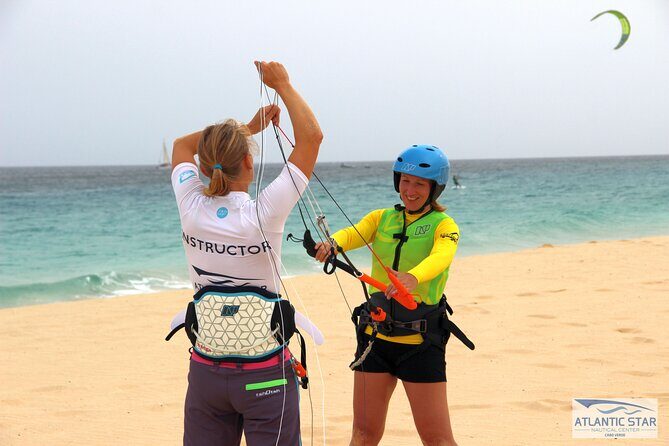
The experience is built around kitesurfing at kite beach on Sal Island. That location isn’t just scenic. For learning, what you want is a training environment where you can repeat the same core skills safely and efficiently.
The center also gets credit for good-quality material and a solid choice of kites. That’s quietly important. If the kite sizes or equipment setup don’t match your level and conditions, learning becomes slow and uncomfortable. People in the feedback mention that the material is good quality and the team helps set you up with the right kit for the session.
There’s also a “spot logistics” piece that shows up in how the school operates. Even if you start at the Santa Maria center, you may go to a nearby beach spot for better learning conditions. And the school handles the short drive. That reduces stress so you can focus on what you actually came for: getting stable and moving.
Safety: the one criticism you should not ignore
Here’s the honest balance. One past student wrote a short and direct safety criticism, claiming the instructor wasn’t supervising properly and that an accident occurred. That’s serious enough that you should treat it as a prompt, not an afterthought.
The provider’s response describes the instructor as IKO-certified and says safety norms are followed. In that explanation, the student was seated side-by-side with the instructor, fully equipped with helmet and life vest, and instructed to reduce bar power when wind increased.
Kiteboarding will always carry risk. Wind-driven sports are not risk-free, even with careful instruction. But your best move is to be proactive:
- Ask yourself how the instructor handles your on-water safety briefing.
- Make sure you’re wearing the safety gear provided (helmet and life vest).
- If you’re new, follow the power-control instructions exactly, especially when wind changes.
- Pay attention to supervision and attention level. If you feel unsure, speak up immediately.
This is one of those cases where “everything was great” reviews can’t fully cancel out a “not safe” report. Use both to make your call.
Price and value: is $153.31 worth it for Sal?
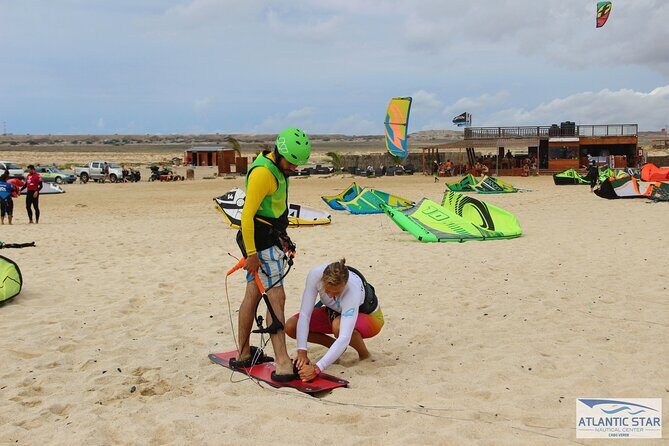
The price is listed at $153.31 per group (up to 1) for about 2 hours, with pickup offered. That pricing structure can look a little confusing because the lessons are designed for two people, while the listing shows per group up to 1. Before you lock it in, check how they handle solo vs paired booking so you know what you’re actually paying for.
Now for value. A two-hour kite lesson on a wind-focused island isn’t just “renting gear.” You’re buying the coaching time, the safety guidance, and the equipment setup that reduces the learning curve. People also mention quick progress after a few training hours, including refreshing skills and moving toward independent riding. If that’s your goal, the timing matters.
So I’d judge the value like this:
- If you’re a first-timer, you’re paying to avoid expensive mistakes and shorten the shaky part of learning.
- If you’re returning after time away, you’re paying for rapid skill refresh with instruction, not just a session of struggling alone.
- If you’re safety-focused, you’re also paying for a structured teaching environment, not wandering to the beach and guessing.
With pickup included and the lesson centered on Kite Beach training conditions, the price feels aligned with a proper coached start.
Weather and timing: choosing a time slot that actually works
Cape Verde’s wind is why Sal is famous for kitesurfing, but lessons require good weather. That means you’ll want to pick a time when conditions are more likely to cooperate, and you should keep flexibility in your schedule.
The school offers several different times throughout the day. For you, that translates to an easy way to match your lesson with your energy levels. Morning sessions can feel sharp and focused; later sessions can be a chance to learn after a day of watching kites on the beach. Either way, the key is wind and safety conditions.
If conditions are poor, the experience can be changed or refunded. That’s important for planning, because with wind sports, it’s better to adapt than to force it.
Who should book these kite lessons (and who might reconsider)
This lesson is designed for all levels. There’s no age limit, but you do need to be able to swim and meet the minimum weight of 35 kg.
You’ll likely love booking if:
- You’re curious about kiteboarding and want a structured first step in a real hotspot.
- You want instruction that fits into a two-hour window.
- You’re traveling with a partner or you’re okay being paired in a two-person lesson setup.
- You appreciate coaching that can adjust to conditions.
You might think twice if:
- You’re uncomfortable with water safety requirements.
- You expect an entirely risk-free experience. It isn’t.
- You’re the type who needs very rigid reassurance and constant supervision on the water. In that case, ask direct questions before you start and confirm how supervision works in real time.
Should you book Atlantic Star for kite surfing on Sal?
I think you should book if you want your kiteboarding learning to happen in the place that kiteboarders talk about for a reason, and you’re ready to take instruction seriously. The combination of two-person coaching, Kite Beach training conditions, and a team praised for motivation (Jailson, Kenny) is a strong recipe for a satisfying first or improved session.
But book with open eyes. Read the safety criticism as a reminder to stay engaged, follow the power-control guidance, and make sure you’re being supervised properly. If you do that, you’re giving yourself the best shot at a confident, fun session that feels like a real start.
FAQ
How long is the kite surf lesson on Sal Island?
The lesson runs for about 2 hours.
Do I need to be able to swim?
Yes. You need to be able to swim to participate.
Is there a minimum weight requirement?
Yes, the minimum weight is 35 kg.
Is there an age limit?
No age limit is listed, as long as you meet the swim and weight requirements.
Is pickup included?
Pickup is offered. The meeting point is the Atlantic Star Nautical Center at the beach of Santa Maria.
What if the wind or weather is poor?
The experience requires good weather. If it’s canceled due to poor weather, you’ll be offered a different date or a full refund. Free cancellation is also allowed up to 24 hours in advance, with no refund if you cancel within 24 hours.