REVIEW · SANTIAGO
Guided City tour Praia with Cidade Velha (World Heritage)
Book on Viator →Operated by Kapverden Tours · Bookable on Viator
Praia and Cidade Velha in one half-day. This guided outing is a fast way to get your bearings in the capital and then step into Cidade Velha’s bigger story about Cape Verdean origins and the early Atlantic trade. I especially like the market-and-city feel of Praia paired with the Cidade Velha UNESCO context, and I like that it stays manageable in time. The main thing to consider is that 3 to 4 hours goes quickly, so you’ll want to treat it as orientation and highlights rather than a slow, deep wander.
The tour is run by Kapverden Tours and is small by design, with a maximum group size of 6. You get a pickup option in Praia, plus a mobile ticket, and admission at the stops is included. If you’re the type who loves clear explanations—like Edson (great English) and José (attentive to questions)—this is an easy way to make your time count.
In This Review
- Key highlights you’ll feel on the ground
- Starting in Praia: square, shortcuts, and first impressions
- Mercado Municipal di Praia: color, bargaining energy, and local rhythm
- Igreja Nossa Senhora da Graca: the colonial church that still matters
- Mercado de Sucupira: an African market angle on Santiago
- Cidade Velha: understanding Cape Verde’s origins and Atlantic beginnings
- What 3 to 4 hours feels like (and how to plan your day)
- Price value: what $58.81 gets you
- Guides make the difference: what good English support looks like
- Practical notes: pickup, tickets, and weather timing
- Should you book Praia with Cidade Velha?
- FAQ
- How long is the Praia and Cidade Velha guided city tour?
- Is pickup available?
- What does the price include?
- How large is the group?
- Do I need a printed ticket?
- What happens if the weather is poor?
- Can I cancel and get a full refund?
Key highlights you’ll feel on the ground
- Small group size (max 6) means less waiting and more room for questions
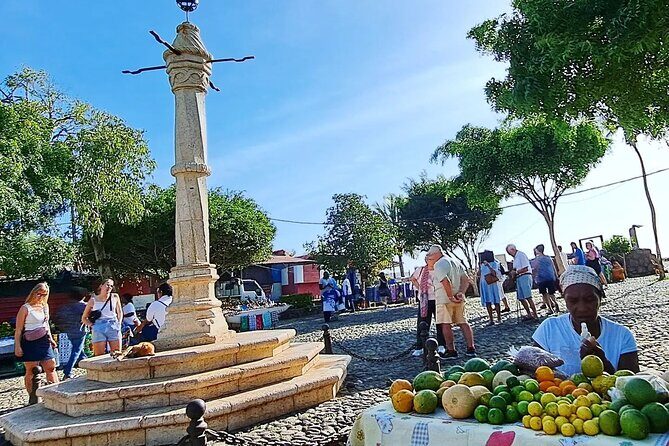
- Praia’s central square + municipal markets give you a real slice of daily life
- A 19th-century Portuguese-built church that still anchors the city today
- Cidade Velha’s UNESCO setting connects the people of Cape Verde to the first European settlement in the tropics
- Free admission for the stops keeps your costs predictable
Starting in Praia: square, shortcuts, and first impressions
You begin in Praia at Praca Alexandre Albuquerque, the kind of main square where you can quickly understand how the city is laid out. It’s not just a photo stop. Being there early helps you orient yourself before you move into the busier, more sensory parts of the capital.
From there, the tour shifts from “look around” to “see how people live.” That matters because Praia can feel like a regular capital at first glance—until you step into the places where everyday commerce happens.
If you’re short on time (and most people are), this sequence does a smart job: central orientation first, then markets. The whole tour is designed for a first solid impression, not for doing every street in town.
You can also read our reviews of more guided tours in Santiago


Mercado Municipal di Praia: color, bargaining energy, and local rhythm

Next up is Mercado Municipal di Praia, often the most colorful stop on this experience. A municipal market like this is where you learn faster than you would from any map.
You’ll spend about 30 minutes here, which is enough time to:
- see the range of stalls and goods,
- watch how sellers interact,
- and ask basic questions without feeling rushed.
Keep your expectations practical. Markets are not museums. You’re there to understand the rhythm—what people are buying, how the space works, and how “public life” feels in Praia.
Also, if you’re a visual learner, this is a good stop for you. You’ll leave with a stronger sense of the island’s daily texture, not just landmarks.
Igreja Nossa Senhora da Graca: the colonial church that still matters

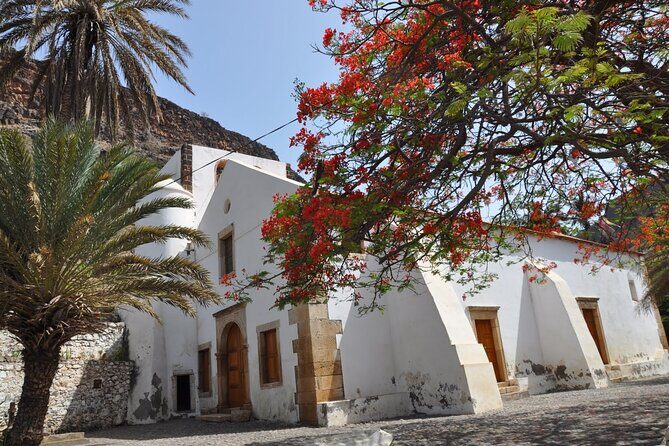
Then you move to Igreja Nossa Senhora da Graca, described as the biggest colonial church built by Portuguese colonial power in the 19th century. The important part isn’t only the architecture. It’s that the church still functions today as a main church in the city.
This stop is about 20 minutes, which works well because churches are powerful but easy to overstay. You get the “why it’s here” context, you see the colonial look, and you’re ready for the next change of pace.
If you’re curious about how history leaves physical fingerprints, this is one of the best places on the tour to notice it. The building doesn’t feel like a relic—it feels like something that continued shaping the city.
One practical thought: dress modestly, just like you would at any active church. Cape Verde is relaxed, but being respectful goes a long way.
Mercado de Sucupira: an African market angle on Santiago
The next market stop is Mercado de Sucupira, called the biggest market on the island and described as the most African market in Cape Verde.
You’ll have around 30 minutes here. That’s a helpful contrast to the municipal market in Praia: different vibe, different focus, and a different “cultural lens.” Even if you don’t plan to buy much (and you don’t have to), the value is in understanding the marketplace as a social meeting point.
If you’re someone who likes to move beyond the postcard version of a place, this stop helps. Markets are where you can see local identity in motion—people, routines, and conversations.
Cidade Velha: understanding Cape Verde’s origins and Atlantic beginnings
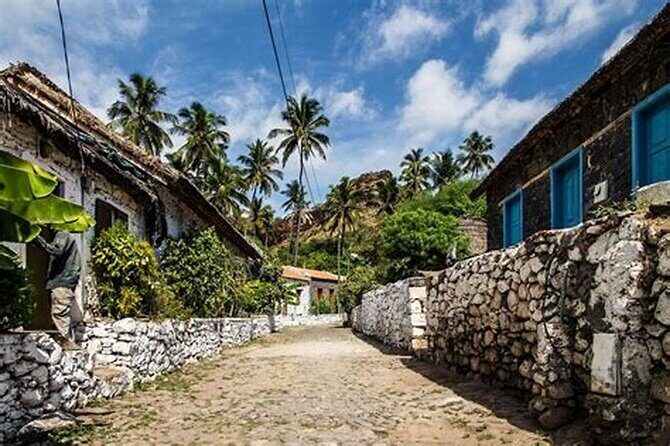
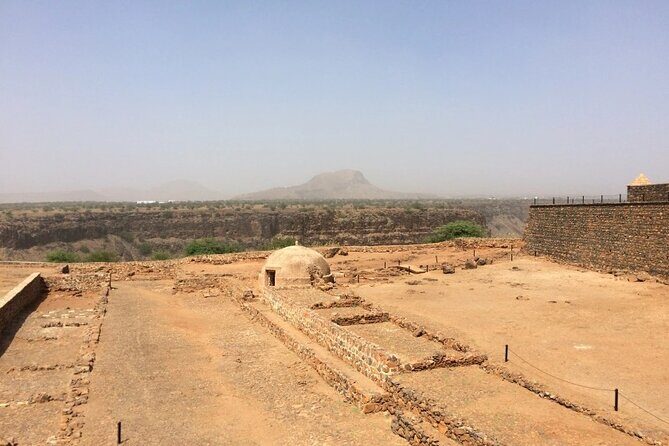
The biggest highlight is Cidade Velha, with about 2 hours on-site. This is the first European settlement outside Europe in the tropics, and it’s where the tour frames the deeper story: the origin of Cape Verdean people and the beginning of the slave trade in the Atlantic.
That’s heavy material, so pace matters. Two hours is a solid amount of time for a guided experience, especially when you’re coming from Praia and you also want enough energy to take it in.
What I like here is the way the tour connects people and place. You’re not only seeing old stones. You’re getting the “why this place matters” explanation, which makes the site feel less like a stop on a schedule and more like a living anchor for identity.
Also, it’s World Heritage, which is your reminder that this isn’t an obscure local ruin. Cidade Velha carries global importance, and it helps your understanding of Santiago beyond the capital city view.
If you want the best photos, bring your patience. The best lighting might not match your next step on the route. Just accept it, and you’ll still come away with memorable images.
You can also read our reviews of more city tours in Santiago

What 3 to 4 hours feels like (and how to plan your day)

This is a half-day style outing, lasting about 3 to 4 hours. That time window is one reason it’s so popular: you get multiple distinct stops without burning your whole day.
The practical rhythm looks like this:
- You start in central Praia,
- you spend time in marketplaces and a key church,
- then you head to Cidade Velha for the longer, more reflective portion.
Because the total time is limited, you’ll want to skip the idea of shopping “deeply” at every market. Think of it more like sampling and observing. If you want to buy, do it with a plan: pick one or two items you genuinely want, not ten “maybe later” purchases.
Group size is also a big factor. With a maximum of 6 travelers, you’re less likely to get stuck waiting while someone stops to read every sign. It keeps the experience moving, which is what you want on a short visit.
Price value: what $58.81 gets you

The price is $58.81 per person, and the tour includes admission tickets for the listed stops. It also offers pickup and uses a mobile ticket, which helps if you don’t want to manage paper.
For value, the key is not just the cost—it’s the mix:
- You get guided context in Praia,
- you get multiple stops rather than one,
- and you also get the UNESCO highlight of Cidade Velha in the same package.
In practice, that means you’re paying for your transportation time and a guide’s ability to connect the dots. If you were to DIY, you’d likely spend more time figuring out sequencing and story. Here, the story is handed to you in the right order.
One more value point: the average booking window is about 29 days in advance, which usually suggests it’s a popular slot. If you’re traveling in a busier season, booking early can help you lock in your preferred day.
Guides make the difference: what good English support looks like
The quality of guidance shows up in the details people cared about—clear explanations and good English.
You may encounter guides like Edson, praised for being knowledgeable with perfect English, or Orlando, who adapted to the group and handled questions well. José is described as attentive and responsive, and Romina is mentioned as giving strong advice about booking the right tour at the right time.
Even if your language skills are fine, I’d still choose a guided option like this because the historical thread matters. Cidade Velha’s significance can be easy to miss if you’re just looking at structures. A good guide helps you connect the setting to the bigger Atlantic story.
If you’re multilingual, great—but if you mainly speak English, pay attention to guides’ ability to communicate. This tour has a track record of doing it well.
Practical notes: pickup, tickets, and weather timing
Pickup is offered in Praia, and the experience ends back at the meeting point, which makes your planning easier. You don’t have to figure out complicated end-of-day transport.
You’ll use a mobile ticket, and confirmation is received at booking. Those two details sound small, but they cut stress when you’re juggling beach time, market time, and a limited schedule.
One important planning reality: the experience requires good weather. If it can’t run due to poor conditions, you’ll be offered a different date or a full refund. That’s worth factoring into how tight your itinerary is—leave some breathing room.
Also, the tour requires a minimum number of travelers. If that minimum isn’t met, you’ll get an alternative date/experience or a refund. If your schedule is strict, booking earlier helps.
Should you book Praia with Cidade Velha?
If you’re on Santiago for a short visit and you want the best blend of Praia orientation + Cidade Velha’s UNESCO story, book this. It’s built for people who want a guided framework fast, not for those who want an all-day, stop-everywhere wandering day.
I’d especially recommend it if:
- you like market sights but still want historical context,
- you prefer small groups (max 6),
- you want clear English explanations,
- and you want free admission stops handled for you.
The main reason not to book is simple: if you’re the type who wants to linger in each place for long, this pace may feel too tight. Treat it as a highlight-and-meaning tour. Then, if you fall in love with a specific area, you can go back on your own with a fuller sense of what to look for.
FAQ
How long is the Praia and Cidade Velha guided city tour?
It runs for approximately 3 to 4 hours.
Is pickup available?
Yes. Pickup is offered, and the tour ends back at the meeting point.
What does the price include?
The price is $58.81 per person, and admission tickets for the listed stops are free/included.
How large is the group?
The tour has a maximum of 6 travelers.
Do I need a printed ticket?
No. This experience uses a mobile ticket.
What happens if the weather is poor?
The tour requires good weather. If it’s canceled due to poor weather, you’ll be offered a different date or a full refund.
Can I cancel and get a full refund?
Yes. You can cancel up to 24 hours in advance for a full refund. If you cancel less than 24 hours before the start time, the amount you paid won’t be refunded.