REVIEW · ILHA DO FOGO
7. Ascension of VOLCAN Grand Pico to FOGO
Book on Viator →Operated by Qualitur Viagens e Turismo · Bookable on Viator
Pico de Fogo makes you work for your views. This is a serious climb to 2829 meters, the highest point in Cape Verde, done with an experienced local mountain guide. I love the blend of challenge and reward: you get that close-to-the-crater feeling while still having scheduled breathers. I also like the descent on volcanic ash, which turns the toughest part into something lighter and even a bit jovial. The catch: this hike is difficult, so if you’re not in strong physical shape (or heights make you nervous), skip it.
On Ilha do Fogo, the volcano experience is the point, and the format is built for hikers. Expect a total outing around 4 to 6 hours, with roughly 3 to 4 hours up and 1 to 2 hours down, paced by your group and the guide. The maximum group size is 22, so you’re not getting herded like cattle.
One more thing worth knowing: the route depends on good weather. When conditions are poor, you’ll be offered a different date or a full refund, so you’ll want some flexibility in your Fogo plan.
In This Review
- Key Highlights You’ll Actually Care About
- Pico de Fogo to Grand Pico: Why This Climb Feels Different
- The Ascent Up Grand Pico: 3 to 4 Hours of Honest Climbing
- Breaks, Pace, and Why an Experienced Guide Matters
- Reaching the Top: Crater Proximity and Panoramic Payoff
- The Descent on Volcanic Ash: Light Steps and a Better Mood
- Timing: What a 4 to 6 Hour Day Actually Feels Like
- Pickup, Mobile Tickets, and Small-Group Vibes
- Price and Value: Is $51.51 Worth It?
- Weather Rules: The One Thing That Can Change Your Plans
- Fitness Checklist: Who Should Do This (and Who Should Not)
- Communication and Local Operator Feel: What Makes It Easier
- Should You Book the Ascension of VOLCAN Grand Pico to FOGO?
- FAQ
- Where is the Ascension of VOLCAN Grand Pico to FOGO?
- How long does the hike take?
- How high do you climb?
- Is the experience difficult?
- Will there be a guide?
- Is pickup included?
- How big is the group?
- Is there an admission fee for Pico do Fogo?
- What happens if the weather is bad?
- How does free cancellation work?
Key Highlights You’ll Actually Care About

- Highest point in Cape Verde: climb to 2829 m near an active crater.
- Guided effort, not a solo stunt: you hike with an experienced local mountain guide.
- Real time on the mountain: about 5 hours total on average, split between ascent and descent.
- Volcanic-ash descent: the downhill is described as light and pleasantly fun.
- Small-ish groups: maximum 22 travelers, with a minimum of 2.
Pico de Fogo to Grand Pico: Why This Climb Feels Different
Cape Verde’s volcano climbing is not about lining up at a view deck. Here, the whole experience is the mountain—because Pico de Fogo (the active Grand Pico) is still in activity, and you’re going up toward the crater. At 2829 meters, you’re not just walking on a hill. You’re going up far enough that the air, the effort, and the focus change.
What I like about this kind of hike is the emotional arc. You start with the “Can I really do this?” moment, and you end with the “I can’t believe I’m this close” payoff. The top is described as tranquil and unruffled, yet still active—so you get that mix of calm scenery and real geological power.
Also, the terrain makes the experience feel physical in a good way. You’re not doing a stroll. You’re climbing over volcanic ground, and that gives the day a clear purpose from start to finish.
You can also read our reviews of more tours and experiences in Ilha do Fogo.
The Ascent Up Grand Pico: 3 to 4 Hours of Honest Climbing
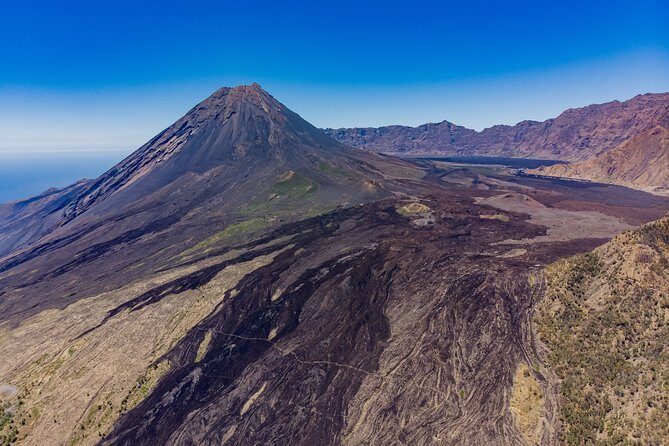
You gain over 1000 meters of elevation as you climb, which is why the difficulty rating is straightforward: this is a difficult hike. The ascent typically takes 3 to 4 hours, depending on pace.
The ascent is not meant to be a speed contest. Your guide leads the route and the hike is regularly broken up with stops so you can breathe and look around. That matters because the goal is getting you to the top safely, not grinding you into the ground.
Here’s the practical takeaway: if you know you struggle on steep climbs, train for elevation before you come. If you’re the person who needs frequent breaks on moderate hills, plan to treat this as a workout. You’ll enjoy the day more when you set the right expectations early.
Breaks, Pace, and Why an Experienced Guide Matters
You’re not on your own. You’ll be accompanied by an experienced local mountain guide with strong knowledge of the volcano. That’s not just for safety. It changes how the climb feels.
A good guide controls the pace and keeps the hike humane. One example that stands out is guide Flavio, who was praised for being patient and helpful and for checking in during the hike. That kind of attention is the difference between pushing through discomfort and feeling supported the whole way.
Because this is an active volcano environment, you want someone who can guide you through the route confidently and manage the group’s rhythm. With a maximum of 22 people, the guide can still keep an eye on hikers rather than just leading a long conga line.
Reaching the Top: Crater Proximity and Panoramic Payoff
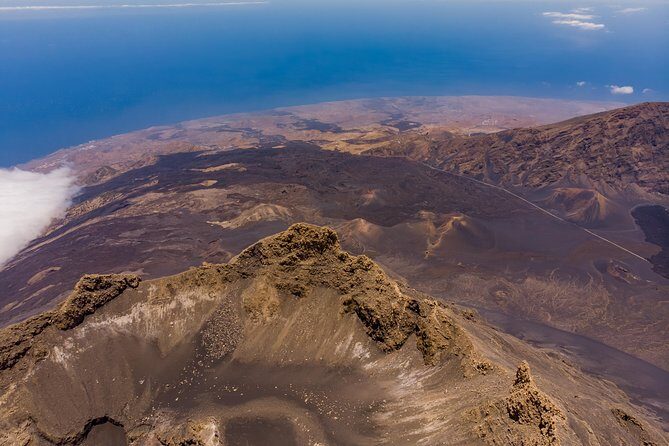
At the summit, the feeling described is extreme satisfaction. It makes sense. You’re at high altitude, and you’re very close to the crater of Grand Pico. The view isn’t just “pretty.” It’s an “I’m standing inside the story” kind of moment.
The volcano is quiet and unruffled at the top, yet still active. That combination is eerie in a calm way. You get the sense of real power without the drama of constant fireworks.
From a traveler’s point of view, this is where the value lives. The hard work isn’t random. It’s the price you pay to stand near the crater and see the surrounding volcanic features, including the other chimneys described from up there.
And yes, you’ll be tired. But that fatigue comes with context—because you can point at the crater and know you earned your closeness to it.
The Descent on Volcanic Ash: Light Steps and a Better Mood
Here’s where the day flips. The descent takes about 1 to 2 hours, depending on pace. Instead of draining you even more, it’s described as light and very pleasant.
You descend on volcanic sand/ash, and that matters because it changes your rhythm. If you go up too fast, your legs punish you. But if you pace the climb and use the breaks well, the descent can feel almost like a release.
Also, the descent is described as jovial. That’s a nice way of saying people often relax here. After you’ve made it to the top and taken in the views, you’re moving with a different mindset: fewer questions, more smiles, more “we did it” energy.
Timing: What a 4 to 6 Hour Day Actually Feels Like
This excursion runs about 4 to 6 hours. The average total time is around 5 hours. Your day breaks down roughly like this:
- Ascent: 3 to 4 hours
- Descent: 1 to 2 hours
Those times aren’t fixed to the minute, because pace and comfort matter. Breaks happen during the climb. The guide adjusts rhythm based on the group.
For planning, think of this as a full morning or afternoon commitment on Fogo. If you’re trying to cram lunch, beach time, and a second activity the same day, you’ll probably feel rushed. Give yourself buffer time so you can arrive back feeling proud, not wrecked.
Pickup, Mobile Tickets, and Small-Group Vibes

The tour includes pickup offered, which is a big deal when you’re trying to reduce logistical stress. You’ll also get a mobile ticket, which is convenient if you don’t want to juggle paper.
Group size is capped at 22. That’s comfortably small for an activity like this, where everyone’s speed varies and you’ll want the guide to stay connected with the group.
One more point: the minimum number of participants is 2. That means there’s a chance the climb might be adjusted or canceled if not enough people join, but it also means you’re not stuck with a massive crowd.
Price and Value: Is $51.51 Worth It?
At $51.51 per person, this hike is priced like an excursion that sells the guide and the mountain time. And the overall duration—about 4 to 6 hours—means you’re buying an experience that doesn’t vanish in an hour and a half.
A couple of value signals are worth noting:
- The climb is guided by an experienced local mountain guide.
- The stop connected with Pico do Fogo lists admission ticket free.
- You’re in the 5-hour range on average, with meaningful ascent time to the crater.
Also, the booking pace is steady—about 29 days in advance on average. That doesn’t guarantee anything, but it suggests this is a popular way to experience Fogo without trying to DIY a difficult climb.
If you want a “cheap and cheerful” outing, this isn’t it. If you want a real volcanic challenge with a guided route and a crater payoff, it’s priced in a reasonable zone for what you’re doing.
Weather Rules: The One Thing That Can Change Your Plans
This experience requires good weather. That’s not a small detail—it’s the difference between a safe, enjoyable climb and a day you shouldn’t risk.
If it’s canceled due to poor weather, you’ll be offered a different date or a full refund. So while you can’t control the forecast, you can control your flexibility. Try not to lock in a tight schedule on the same day you want to hike.
For the hiking mindset, treat weather as part of the adventure rather than a frustration. Volcanic terrain is not the place to “just try anyway.”
Fitness Checklist: Who Should Do This (and Who Should Not)
This hike is labeled difficult, and the requirement is clear: you should have strong physical fitness. The ascent climbs more than 1000 meters in elevation, and the route is described as regularly sporty/sometimes sporty.
Here’s the honest decision rule I’d use:
- If you love hiking and you’re comfortable with steep climbs, you’ll likely have an amazing day.
- If you’re afraid of heights or your fitness isn’t strong, don’t treat this as a maybe. The climb is tough enough that fear and fatigue can snowball.
Altitude also plays a role at 2829 m. Even if you’re athletic, plan to go slower than you think. The guide’s breaks exist for a reason, and taking them early helps prevent “I’m fine” turning into “I can’t believe this.”
Communication and Local Operator Feel: What Makes It Easier
The provider behind this experience is Qualitur Viagens e Turismo. What helps is that they communicate in advance and make it easier to find their office in São Filipe. Before the hike, that kind of clarity matters, because on an active-volcano day you want your head in the right place—on your breathing, your footing, and your timing.
If you get updates and you know where to go, you spend less time worrying and more time hiking.
Should You Book the Ascension of VOLCAN Grand Pico to FOGO?
Book it if you want a guided, difficult hike to Cape Verde’s highest point and you’re genuinely happy on steep trails. This is ideal for adventurers and mountain lovers who want real payoff: crater proximity, panoramic views, and a volcanic descent that can keep your mood upbeat.
Skip it if you’re not in strong physical shape, or if you’re dealing with fear of heights. You’ll feel it on the climb, and the day is not designed for recovery-mode walkers.
If you’re on the fence, ask yourself one quick question: Do you look forward to a climb where breaks are earned and the top is the goal? If yes, this is one of the most memorable ways to experience Ilha do Fogo.
FAQ
Where is the Ascension of VOLCAN Grand Pico to FOGO?
It takes place on Ilha do Fogo in Cape Verde.
How long does the hike take?
The duration is about 4 to 6 hours. On average, the excursion lasts around 5 hours, with a 3 to 4 hour ascent and a 1 to 2 hour descent.
How high do you climb?
The volcano Pico de Fogo reaches 2829 meters above sea level, and you climb more than 1000 meters in elevation.
Is the experience difficult?
Yes. It is described as a difficult climb, and you should have strong physical fitness.
Will there be a guide?
Yes. You’ll be accompanied by an experienced local mountain guide.
Is pickup included?
Pickup is offered.
How big is the group?
The maximum group size is 22 travelers. There is a minimum of 2 participants.
Is there an admission fee for Pico do Fogo?
For the stop at Pico do Fogo, the admission ticket is listed as free.
What happens if the weather is bad?
The experience requires good weather. If it’s canceled due to poor weather, you’ll be offered a different date or a full refund.
How does free cancellation work?
You can cancel up to 24 hours in advance for a full refund. If you cancel less than 24 hours before the start time, the amount paid is not refunded.